SCOTCAT.COM
your internet guide to all things catfish
Sorubim lima (Bloch & Schneider, 1801) |
Image contributors to this species: |
Bernie Molnar (2) Daniel Blom (2) Chris Ralph (2) Peru Aquarium Group (1) Wolfgang Ros (2) Enrico Richter (1) Julio Endler (1) Devya Hemraj (2) |
ScotCat Sources: |
|
|


Other Sources: |
|


Relevant Information: |
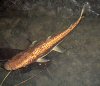
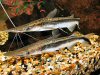
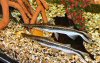
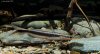
Description: Dorsal spines (total): 2; Dorsal soft rays (total): 6; Anal soft rays: 19 - 22. Distinguished from S. elongatus by having modally 9 pectoral rays; 21 anal-fin rays; 16 gill rakers; large vomerine tooth patches, almost always fused; a more robust, deeper head and body; body somewhat compressed laterally; mental barbels equal or anterior to gular apex. Differs from S. cuspicaudus in having rounded caudal fin lobes and more robust body; from S. trigonocephalus by premaxillary tooth patch length being 1.5 to 2.5 times its width; trenchantly differs from S. maniradii in having only 13-18 gill rakers. Additionally, other distinguishing characters include, pelvic fins that contact or nearly reach anal fin origin when depressed and presence of thin plates or ossicles (highly variable in shape) extending vertically on anterior lateral line in most large adults. Body shape (shape guide): elongated. This species along with Sorubim elongatus are the two most seen species in this genus. There are another three that are that bit rarer, S. trigonocephalus, S. cuspicaudus and S. maniradii. Aquarium Care: Anything large enough will fit into its mouth so you should choose tankmates carefully. Large Cichlids or Plecos would be good companions or larger Characins, but they will also co-exist with one another, so 2 or 3 individuals brought together as juveniles in a larger tank (min. 7ft x 2ft x 2ft) would also be a good choice. Diet: In the aquarium it is important to try and wean them of live food so as not too make them too dependent on it and also not forgetting the disease factor as well. They will take a variety of larger foods such as earthworms, frozen bloodworms, tablet and pellet food. You can try prawns and also frozen fish pieces such as lancefish etc. Etymology: The specific name lima: Meaning a file in Latin, refers to the ventrally exposed premaxillary tooth patch. |
Common Name: |
Synonyms: |
Platystoma lima, Silurus lima, Sorubim infraoculare, Platystoma luceri, Sorubim latirostris, S.luceri. |
Family: |
Pimelodidae |
Distribution: |
South America: The widest-ranging species, occurring in most of the major drainage basins of South America. |
Size: |
45.0cm. (18ins) |
Temp: |
23-30°C (73-87°F) |
p.H. |
|
6.5-7.5. |
IUCN Red List |
Sorubim lima occurs in the Amazon, Orinoco, Paraná, Uruguay, and Paraguay river basins in Brazil, Bolivia, Colombia, Argentina, Paraguay, Peru, Uruguay, and Venezuela. The species is widely distributed, frequent, and abundant. As no significant threats to its population have been detected, Sorubim lima has been categorised as Least Concern, (IUCN 2022). |
Reference: |
Chico Mendes Institute
for Biodiversity Conservation (ICMBio).
2022. Sorubim lima. The IUCN Red List of
Threatened Species 2022. |

Family: Pimelodidae Back to Ident-A-Cat Click on Thumbnails |
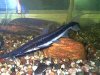 Sorubim
lima Sorubim
lima |
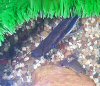 Sorubim
lima Sorubim
lima |
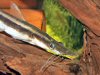 Sorubim
lima Sorubim
lima |
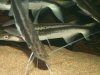 Sorubim
lima Sorubim
lima |
 Sorubim
lima Sorubim
lima |
 Sorubim
lima Sorubim
lima |
 Sorubim
lima Sorubim
lima |
 Sorubim
lima Sorubim
limaPair-female above |
 Sorubim
lima Sorubim
limaPair-female above |
 Sorubim
lima Sorubim
limaFrom Peru |
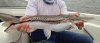 Sorubim
lima Sorubim
lima |
 Sorubim
lima Sorubim
lima |
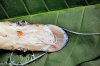 Sorubim
lima Sorubim
limaMouth view |
If you would like to contribute to the monthly factsheets with an article, information or photos, please e-mail me. You will of course be credited for your work.

If you would like to donate any denomination of monies to the site just click the above link button. All proceeds will go to running the site and hopefully to keep it going for a few years yet.

