SCOTCAT.COM
your internet guide to all things catfish
Neosiluroides cooperensis Allen & Feinberg, 1998 |
Image contributors to this species: |
Peter J. Unmack (2) |
ScotCat Sources: |
|
|

Other Sources: |
|


Relevant Information: |
Very aggressive towards other fishes, particularly in captivity. Habitat: Usually found in larger, more permanent waterholes with an earth and clay substrate. Significant flow occurs only after severe rainfall events, water is typically very turbid. Colouration: Grey to yellowish brown with darker speckling on sides, belly whitish or pale yellow, fins grey to yellowish. Reproduction: Has the largest egg size (3-4 mm) and lowest fecundity (about 1000 eggs per spawning) per unit length of any plotosid catfish in Australia. Diet: Feeds on gastropods and crustaceans. Etymology: The specific name: cooperensis: After the Cooper Creek system, Australia, part of the Lake Eyre drainage basin. Remarks: When first discovered in the Cooper Creek system it was given the common name of Neosiluroides sp. B. |
Common Name: |
Cooper Creek catfish, Cooper Creek Tandan, Neosiluroides sp. B. |
Synonyms: |
None |
Family: |
Plotosidae |
Distribution: |
Oceania: Endemic to Australia. Cooper Creek system, part of the Lake Eyre drainage basin. |
Size: |
50.0cm. (20ins) |
Temp: |
22-28°C (71-83°F) |
p.H. |
|
6.5-8.0. |
IUCN Red List |
Neosiluroides cooperensis is cryptic and naturally rare. It is endemic to the Cooper Creek system of the Lake Eyre Drainage Basin and is currently known from a total of 38 localities. This species occupies a total area (AOO) of approximately 128 km2, nearly all of which is permanent riverine refugia (waterholes). Under a conservative climate scenario waterhole persistence is predicted to decrease by up to 30%. Furthermore, N. cooperensis is potentially threatened by the translocated predatory Oxyeleotris lineolata (Sleepy Cod), which has colonised many refugial waterholes of Cooper Creek. Oxyeleotris lineolata is considered to be a serious conservation risk outside of its natural range, and it is highly probable the two species interact during periods of extended waterhole drying. These risks will continue into the future given that eradication of O. lineolata from Cooper Creek is highly unlikely. The threat from O. lineolata is likely to spread across the whole distributional range of N. cooperensis following large flows, representing a single location for N. cooperensis. Neosiluroides cooperensis is therefore listed as Endangered, (IUCN 2019). |
Reference: |
|
Allen, G.R. Dr.;
Freshwater Fishes of Australia. TFH Publications,
Inc. 1989. 240 p. |

Family: Plotosidae Back to Ident-A-Cat Click on Thumbnails |
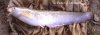 Neosiluroides cooperensis
 |
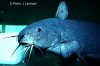 Neosiluroides
cooperensis Neosiluroides
cooperensis |
If you would like to contribute to the monthly factsheets with an article, information or photos, please e-mail me. You will of course be credited for your work.

If you would like to donate any denomination of monies to the site just click the above link button. All proceeds will go to running the site and hopefully to keep it going for a few years yet.

