SCOTCAT.COM
your internet guide to all things catfish
Pareutropius debauwi (Boulenger, 1900) |
Image contributors to this species: |
|
Hippocampus Bildarchiv (2) Joe Cutler (2) |
ScotCat Sources: |
|

Other Sources: |


Relevant Information: |
Description: Dorsal spines (total): 1; Dorsal soft rays (total): 4 - 6. Diagnosis: single pair of mandibular barbels; 4-5 (exceptionally 6) branched dorsal fin rays; 30-54 branched anal fin rays; no dark oblique band (from posterior border of operculum to above anus), no dark spots on caudal lobes, dorsal dark band continues onto caudal fin. 7-8 (rarely 9) branchiostegal rays on one side of head; base of anal fin marked by small dark line. Body shape (shape guide): elongated. There is another species from the same genera, P. buffei that is sometimes confused with P. debauwi but the former has got a second body stripe that P.debauwi does not possess, and it has a more rounded caudal fin. P. debauwi is is not such a colourful fish as P. buffei. P. buffei has a blotch on each caudal fin whereas P. debauwi has not and a dark edge shows to the adipose fin of P. debauwi. Habitat: Riverine species with gregarious habits, confined to large as well as moderate and small water systems. Forms schools. Aquarium Care: You will need to purchase at least 6 of this species as they are a schooling fish and need their own company. If you only buy one or two they will hide and waste away, but apart from that they are easy to keep and seem to live for a considerable length of time if given a spacious tank with a good water current and the undertaking of water changes when needed. Diet: Carnivorous with insectivorous preference; reproduction probably coincides mainly with flood periods. Etymology: The specific name debauwi: In honour of Lieut. Guillaume De Bauw (1865–1914), Belgian Army officer, who collected holotype. Remarks: P. debauwi is a lot rarer in the hobby than P. buffei. |
Common Name: |
Debauwi Cat |
Synonyms: |
Eutropius debauwi, Eutropiellus debauwi, E. kasai Ansorgia debauwi, A. debauwi vittata, A. vittata, A. vittatta bistriata, Eutropiella debauwi, Eutropiellus debauwi vittata, E. vittatus, Ansorgiichthys vittatus |
Family: |
Schilbeidae |
Distribution: |
Africa: Ogowe River in Gabon, Congo system and Chiloango River. Type locality: Uerre. |
Size: |
7.0cm. (2¾ins) |
Temp: |
23-27°C (73-81°F) |
p.H. |
|
6.0-8.0. |
IUCN Red List |
The species is widespread without major threats throughout central Africa and is assessed as Least Concern. Need updating (IUCN 2010). |
Reference: |
Froese, R. and D. Pauly. Editors.
2025. FishBase. World Wide Web electronic publication.
www.fishbase.org, ( 11/2025 ). |

Family: Schilbeidae Back to Ident-A-Cat Click on Thumbnails |
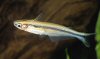 Pareutropius debauwi
 |
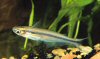 Pareutropius
debauwi Pareutropius
debauwi |
 Pareutropius
debauwi Pareutropius
debauwi |
 Pareutropius
debauwi Pareutropius
debauwi |
If you would like to contribute to the monthly factsheets with an article, information or photos, please e-mail me. You will of course be credited for your work.

If you would like to donate any denomination of monies to the site just click the above link button. All proceeds will go to running the site and hopefully to keep it going for a few years yet.

