SCOTCAT.COM
your internet guide to all things catfish
Phalacronotus apogon (Bleeker, 1851) |
Image contributors to this species: |
Johnny Jensen's Photographic Library (2) Karl-Heinz Dau (1 Stamp) Jean-Francois Helias (3) Zhou Hang (1) |
ScotCat Sources: |
|
|

Other Sources: |
|


Relevant Information: |
Description: Dorsal spines (total): 0; Dorsal soft rays (total): 0; Anal soft rays: 75 - 91. No dorsal fin; greatly reduced barbels (equal to or smaller than eye diameter); a slender body. Body depth 5.7-7.0 times in SL; mandibular barbels smaller than eye diameter or absent. Vomerine teeth in angular band. Habitat: Occurs in large rivers with turbid waters, streams, canals and lakes. Reproduction: Spawns just prior to the rise in water levels and moves into the flooded riparian forests and probably out into the floodplains during high water levels. Young of the year are first seen in July and start to move back to the rivers in October, where they remain common until January. Diet: Feeds on pelagic fishes in midwater to upper depths. Etymology: The genus name Phalacronoyus: phalakrós, bare; notus, from nôtos, back, referring to absence of dorsal fin, i.e., bare-backed. The specific name apogon: Without a beard, (barbels). |
Common Name: |
None |
Synonyms: |
Silurus apogon, Kryptopterus apogon, Phalacronotus leptonema, Silurus leptonema, Micronema apogon |
Family: |
Siluridae |
Distribution: |
Asia: Mekong and Chao Phraya basins, Malay Peninsula, Sumatra and Borneo |
Size: |
70.0cm. (28ins) |
Temp: |
20-26°C (67-79°F) |
p.H. |
|
6.0-7.0. |
IUCN Red List |
Even though this is a species that is likely threatened due to overfishing in parts of its range, recent data indicates that is still sufficiently abundant over most of its range. As the population trend is suspected to be stable or declining at a rate that precludes it from a threatened category, Phalacronotus apogon is therefore assessed as Least Concern. It may be necessary to reassess this species once the effects of fisheries on the populations are better understood, and the taxonomic position of subpopulations require research, (IUCN 2019). |
Reference: |
Froese, R. and D. Pauly.
Editors. 2008. FishBase.World Wide Web electronic
publication. www.fishbase.org, version (03/2009). |

Family: Siluridae Back to Ident-A-Cat Click on Thumbnails |
 Phalacronotus apogon
 |
 Phalacronotus
apogon Phalacronotus
apogon |
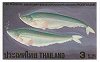 Phalacronotus
apogon Phalacronotus
apogonStamp |
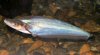 Phalacronotus
apogon Phalacronotus
apogon |
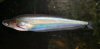 Phalacronotus
apogon Phalacronotus
apogon |
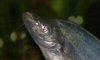 Phalacronotus
apogon Phalacronotus
apogon Head view |
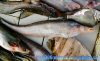 Phalacronotus
apogon Phalacronotus
apogon |
If you would like to contribute to the monthly factsheets with an article, information or photos, please e-mail me. You will of course be credited for your work.

If you would like to donate any denomination of monies to the site just click the above link button. All proceeds will go to running the site and hopefully to keep it going for a few years yet.

