SCOTCAT.COM
your internet guide to all things catfish
Wallagonia maculatus (Inger & Chin, 1959) |
Image contributors to this species: |
ScotCat Sources: |
|
|

Other Sources: |
|


Relevant Information: |
Description: Dorsal spines (total): 1; Dorsal soft rays (total): 4; Anal soft rays: 60 - 66. The diferences between Wallago and Wallagonia are complex and are due to the different bone structures. Habitat: Adults inhabit rivers as well as small forest tributaries. Wallagonia was placed by Myers (1948) and nearly all subsequent authors as a junior synonym of Wallago, but it is was later recognised as a distinct genus by Roberts, T. R. 2014. Aquarium Care: Only juveniles can be kept in aquaria and fed on tablet food, beef heart and similar foods. Adult fish are not deemed suitable for aquarium keeping due to the size, verocity and its feeding needs for living fish. A few internet searches still throw up the old name of Wallago maculatus. Etymology: The specific name maculatus: Latin for spotted, referring to row of black blotches below lateral line [species inquirenda, provisionally included here, possibly a synonym of W. leerii]. Remarks: Wallagonia maculatus is cited in Eschmyer's Catalog of Fishes as uncertain, as it may be a synonym of W. leeri. |
Common Name: |
None |
Synonyms: |
Wallago maculatus |
Family: |
Siluridae |
Distribution: |
Asia: Northeastern Borneo. Type locality: Known only from Sabah, northern Borneo, Malaysia. |
Size: |
100.0cm. (40ins) |
Temp: |
22-26°C (71-79°F) |
p.H. |
|
6.0-7.0. |
IUCN Red List |
Not Evaluated. |
Reference: |
Froese, R. and D. Pauly.
Editors. 2022. FishBase. World Wide Web electronic
publication. www.fishbase.org, ( 08/2022 ). |

Family: Siluridae Back to Ident-A-Cat Click on Thumbnails |
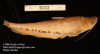 Wallagonia maculatus Holotype |
 Wallagonia
maculatus Holotype |
If you would like to contribute to the monthly factsheets with an article, information or photos, please e-mail me. You will of course be credited for your work.

If you would like to donate any denomination of monies to the site just click the above link button. All proceeds will go to running the site and hopefully to keep it going for a few years yet.

