SCOTCAT.COM
your internet guide to all things catfish
Glyptothorax fuscus Fowler, 1934 |
Image contributors to this species: |
Nonn Panitvong (1) Allan James (2) Gareth Savage (1) |
ScotCat Sources: |
|

Other Sources: |
|


Relevant Information: |
Description: Presence of 2 dark saddles on body, at dorsal fin origin and under adipose fin; rest of body usually covered by irregular spots and blotches; distally expanded neural spines, forming a row of low bumps (each with an elongate tubercle) between dorsal and adipose fins; anal fin origin in front of adipose origin. Usually found in foot-hill streams. Occurs under rocks and logs in fairly strong currents in medium and large-sized rivers. Feeds on aquatic insect larvae. Glyptothorax is distinguished from all other sisorid genera by having an adhesive apparatus on the thorax with with grooves parallel or oblique to the longitudinal axis of the body (vs. thoracic adhesive grooves transverse to the longitudinal axis of the body in Pseudecheneis, and thoracic adhesive apparatus absent in all other genera). Aquarium Care: This is a cool water species of which most of this genera are. A good water flow is also important with high oxygen levels. Other Asian tank mates such as Rasboras, danios, devario's and Puntius species will co-exist fine. Diet: Live foods such as white worms, small earthworms and aquatic insect larvae like bloodworms and similar chironomids, should make up the majority of their weekly diet. They will also accept frozen foods such as bloodworm and also flake and tablet foods. Etymology: The specific name fuscus: Dark or dusky. |
Common Name: |
None |
Synonyms: |
Glyptothorax callopterus |
Family: |
Sisoridae |
Distribution: |
Asia: Chao Phraya, Chanthaburi and Mekong drainages, Thailand, Laos and Cambodia. Type locality: Chantaboon [Chantabun], Chanthaburi drainage, se. Thailand. |
Size: |
12.0cm(4¾ins) |
Temp: |
20-24°c (67-75°f.) |
p.H. |
|
6.5-7.5. |
IUCN Red List |
This species is reported from river drainages throughout southern Sumatra, Bangka, the Malay Peninsula (but extirpated from Singapore) and southeastern Thailand. Although there is no detailed information on the population status of this species, survey data indicates that it is still abundant in many parts of its known distribution and the population trend is thus suspected to be stable or declining at a rate that precludes it from a threatened category. While there may be localised or regional threats, they are unlikely to affect this species on a range-wide scale, and it is found within several protected areas. Therefore, it is assessed as Least Concern, (IUCN 2019). |
Reference: |
Alfred W. Thomson &
Lawrence M. Page; 30 October 2006. Genera
of the Asian Catfish Families Sisoridae and Erethistidae
(Teleostei: Siluriformes) (Zootaxa 1345). |

Family: Sisoridae Back to Ident-A-Cat Click on Thumbnails |
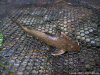 Glyptothorax
fuscus Glyptothorax
fuscus |
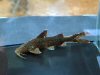 Glyptothorax
fuscus Glyptothorax
fuscus |
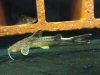 Glyptothorax
fuscus Glyptothorax
fuscus |
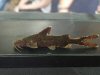 Glyptothorax
fuscus Glyptothorax
fuscus |
If you would like to contribute to the monthly factsheets with an article, information or photos, please e-mail me. You will of course be credited for your work.

If you would like to donate any denomination of monies to the site just click the above link button. All proceeds will go to running the site and hopefully to keep it going for a few years yet.

