SCOTCAT.COM
your internet guide to all things catfish
Glyptothorax striatus (McClelland, 1842) |
Image contributors to this species: |
Fishes of Mainland Southeast Asia (1) Beta Mahatvaraj (3) Arnob Bora (2) |
ScotCat Sources: |
|

Other Sources: |
|


Relevant Information: |
Description: Dorsal spines (total): 1; Dorsal soft rays (total): 6; Anal spines: 12; Anal soft rays: 13; Vertebrae: 37. Distinguished from other species of Glyptothorax in the Indian subcontinent except for G. ater, G. brevipinnis, G. churamanii, G. jayarami, G. nelsoni, G. pantherinus, G. pectinopterus, G. radiolus and G. saisii in having (vs. lacking) a prominently plicate ventral surface of the pectoral-fin spine and the first pelvic-fin ray. Can be separated from G. ater, G. brevipinnis, G. churamanii, G. jayarami, G. nelsoni, G. pantherinus, G. pectinopterus, G. radiolus and G. saisii in having the following combination of characters: snout length 51.8-54.7% HL, wedge-shaped central depression in thoracic adhesive apparatus devoid of skin ridges, pectoral-fin length 18.7-23.8% SL, plicae on ventral surfaces of pectoral-fin spine continuous, dorsal-fin spine length 10.3-15.7% SL, dorsal-to adipose distance 24.9-27.9% SL, body depth at anus 11.0-14.7% SL, adipose-fin base length 10.7-13.5% SL, caudal-peduncle length 18.4-20.7% SL, caudal-peduncle depth 6.8-8.6% SL (1.6-1.9 times in body depth at anus), and distinct pale midlateral stripe on body. Habitat: Inhabits mountain rapids. Etymology: The specific name striatus: Latin for furrowed or grooved, referring to “striated sucker on the breast”. |
Common Name: |
None |
Synonyms: |
Glyptosternon striatus |
Family: |
Sisoridae |
Distribution: |
Asia: Meghalaya and Sikkim in India. Brahmaputra River drainage and Surma-Meghna River system. Type locality: Kasyah mountains. |
Size: |
21.5cm. (8½ins) |
Temp: |
18-24°c (63-75°f.) |
p.H. |
|
6.0-7.0. |
IUCN Red List |
Glyptothorax striatus was described from the Khasi Hills in Meghalaya, India, and is present in the Meghna and Brahmaputra river drainages in India and probably in Bangladesh. Logging, deforestation and mining activities in Khasi Hills threaten the species' habitat and population. Since the range is just over 20,000 km2, this species misses qualifying for Vulnerable category. It is hence assessed as Near Threatened, but needs updating, (IUCN 2010). |
Reference: |
Froese, R. and D. Pauly.
Editors. 2019. FishBase. World Wide Web electronic
publication. www.fishbase.org, ( 12/2019 ). |

Family: Sisoridae Back to Ident-A-Cat Click on Thumbnails |
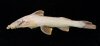 Glyptothorax
striatus Glyptothorax
striatus |
 Glyptothorax
striatus Glyptothorax
striatus |
 Glyptothorax
striatus Glyptothorax
striatusHead view |
 Glyptothorax
striatus Glyptothorax
striatusVentral view of the striated sucker on the breast |
 Glyptothorax
striatus Glyptothorax
striatus |
 Glyptothorax
striatus Glyptothorax
striatus |
If you would like to contribute to the monthly factsheets with an article, information or photos, please e-mail me. You will of course be credited for your work.

If you would like to donate any denomination of monies to the site just click the above link button. All proceeds will go to running the site and hopefully to keep it going for a few years yet.

