SCOTCAT.COM
your internet guide to all things catfish
Glyptothorax trewavasae Hora, 1938 |
Image contributors to this species: |
Beta Mahatvaraj (1) |
ScotCat Sources: |
|

Other Sources: |
|


Relevant Information: |
Description: Rayed dorsal fin inserted above posterier half of pectoral fin, origin nearer adipose than to end of snout, spine strong and smooth. Adipose dorsal fin base equal to that of dorsal. Pectoral fin not reaching pelvic fin, spine strong, serrated with 11 antrose teeth along inner margin and with retrorse teeth along outer margin. Habitat: Glyptothorax trewavasae is endemic to the Western Ghats of India (Dahanukar et al. 2004). It is known from Maharashtra and Karnataka. In Maharashtra it is known from Koyna valley and Yenna (Venna) valley (Hora 1938) and Koyna river near Patan (Jadhav et al. 2011). In Karnataka it is known from Shimoga (Hora 1938) and Kigga falls on Tunga river (Arunachalam 2000). This species is also expected to be present in the hill streams of areas between the known localities. The expected extent of occurrence (EOO) of this species will be around 40000 km2, however, as the species is restricted to hill streams with rapid water flow and is habitat specific, the area of occupancy of the fish may be hardly 2000 km2 (5% of EOO). Colouration: Uniform light gray with pectoral, dorsal, adipose and caudal bases dark. Some portions of certain rays of dorsal, anal and pelvics black, distal portion of caudal fin dark tipped with lighter colour. Inhabits mountain rapids. Etymology: The specific name trewavasae: In honour of British ichthyologist Ethelwynn Trewavas (1900–1993), British Museum of Natural History, who helped Hora distinguish some of the fishes described in his paper based on specimens at the British Museum. |
Common Name: |
None |
Synonyms: |
None |
Family: |
Sisoridae |
Distribution: |
Asia: Krishna river system in Western Ghats, India. Type locality: Yenna Valley, Satara dist., Maharashtra, India. |
Size: |
12.0cm. (4¾ins) |
Temp: |
18-24°c (63-75°f.) |
p.H. |
|
6.0-7.0. |
IUCN Red List |
Even though the expected EOO of Glyptothorax trewavasae is large the species is assessed as Vulnerable because of its restricted area of occupancy and its presence in only five locations. The species is also very rare. Furthermore, deforestation, siltation and organic pollution can change the specific habitat requirement and are major threats to the species, but needs updating, (IUCN 2011). |
Reference: |
Dahanukar, N.
2011. Glyptothorax trewavasae. The IUCN Red
List of Threatened Species 2011. |

Family: Sisoridae Back to Ident-A-Cat Click on Thumbnails |
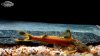 Glyptothorax trewavasae
 |
If you would like to contribute to the monthly factsheets with an article, information or photos, please e-mail me. You will of course be credited for your work.

If you would like to donate any denomination of monies to the site just click the above link button. All proceeds will go to running the site and hopefully to keep it going for a few years yet.

