SCOTCAT.COM
your internet guide to all things catfish
Microcambeva caissara Medeiros, Souto-Santos, Buckup, Ferrer, Reis, de Pinna & Lima, 2026 |
Image contributors to this species: |
Universidade Federal do Rio Grande Do Sul (4 = CC-BY-4.0) |
ScotCat Sources: |
|
|

Other Sources: |
|

Relevant Information: |
Description: Microcambeva caissara differs from all congeners by the T-shape dark blotch in the posterior dorsal portion of the head, which is conspicuous in the dorsal view of preserved specimens. This effect is a visual combination of a median portion formed by brain pigment seen by transparency and two integumentary spots on each side of the posterior end of the dark brain pigmented area (Figure 1b, vs. cephalic hourglass-shaped in M. bendego and M. ribeirae, ellipsoid in M. filamentosa, triangular with constriction near anterior portion in M. draco, hexagonal with median constriction in M. mucuriensis, pentagonal with median constriction in M. jucuensis, diamond-shaped in M. barbata and heart-shaped in M. watu). The new species is further distinguished from congeners, except M. ribeirae and M. bendego, by lacking a filamentous extension of first pectoral-fin ray (vs. ray extending as filament). It is distinguished from M. ribeirae and M. bendego by having the last anal-fin ray branched (vs. unbranched) and five pre-caudal vertebrae (vs. six). It differs further from M. bendego by elongation of the anterior process of the opercle (vs. short process). It is further distinguished from M. ribeirae by tip of maxillary barbel reaching to anterior portion of the interopercular odontodophore (vs. maxillary barbel tip extending beyond posterior margin of interopercular odontodophore); by lateral process of premaxilla short, approximately as long as the remainder of the bone, and round (vs. lateral process approximately twice as long as the remainder of the bone, and pointed), (de Medeiros et al. 2026). Habitat: Microcambeva caissara is only known from the Morato and Cedro rivers, tributaries of the middle portion of the Guaraqueçaba River Basin, at the Municipality of Guaraqueçaba in the Paraná State, Brazil, in the southeastern Mata Atlantica ecoregion (Medeiros et al. 2026). Colouration: Dorsum and trunk translucent. Ventral surface of body pale yellowish. Series of large dark spots along body. Small melanophores distributed irregularly along body. Mid-lateral and upper lateral series of spots with appearance similar to that described for preserved specimens. Dorsal series with four spots irregularly spaced between occipital region and dorsal-fin origin; first spot small posterior to occipital cephalic blotch; fourth spot anterior to dorsal-fin origin; fifth spot posterior to dorsal-fin base. Two spots at caudal peduncle, one at posterior portion of peduncle, another at caudal-fin base. Head with large dark blotch extending over middle of posterior surface of neurocranium. Eyes black, iris yellowish. Ventral surface of head uniform yellowish. Slender brownish blotch extending laterally between anterior and posterior nostrils. Barbels and fins hyaline. Pale brown, V-shaped bar on caudal-fin base, with V-shaped angle of ‘V’ directed posteriorly (de Medeiros et al. 2026). Etymology: The Specific name caissara: The term ‘caiçara’ (‘caá-içara’) originates from the Tupi-Guarani indigenous language and refers to the wood stakes placed around villages or to a fish corral (Adams, 2000; Sampaio, 1987). Over time the name was applied to other concepts, for example huts built on to shelter small canoes or a fishing instrument, and as gentilic to those born in the Cananeía region, in the southern coastal of São Paulo State. Nowadays, Caiçara is commonly used to refer to all natives and communities on the coast of the States of Paraná, São Paulo and Rio de Janeiro (Diegues, 1983). |
Common Name: |
None |
Synonyms: |
None |
Family: |
Trichomycteridae |
Distribution: |
South America: Morato and Cedro rivers, tributaries of the middle portion of the Guaraqueçaba River Basin, at the Municipality of Guaraqueçaba in the Paraná State, Brazil, in the southeastern Mata Atlantica ecoregion. |
Size: |
4.0cm. (1½ins) |
Temp: |
22-26°c (71-79°f.) |
p.H. |
|
6.0-7.0. |
IUCN Red List |
Not Evaluated. |
Reference: |
de Medeiros, L. S.,
Souto-Santos, I. C. A., Buckup, P. A., Ferrer, J.,
Reis, V. J. C., de Pinna, M., & Lima, S. M. Q.
(2026). A new catfish species of Microcambeva
Costa & Bockmann, 1994 (Siluriformes: Trichomycteridae)
from southern Brazil, with a redescription of M.
ribeirae Costa, Lima & Bizerril, 2004. Journal
of Fish Biology, 1–19. |

Family: Trichomycteridae Back to Ident-A-Cat Click on Thumbnails |
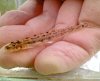 Microcambeva
caissara
Microcambeva
caissaraLive Specimen-Guaraqueçaba River basin, Paraná State, southern Brazil |
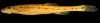 Microcambeva
caissara Microcambeva
caissaraLateral view-holotype-affluent of Guaraqueçaba River at road PR-405, Guaraqueçaba River basin, Guaraqueçaba, Paraná, Brazil |
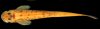 Microcambeva
caissara Microcambeva
caissaraDorsal view-holotype-affluent of Guaraqueçaba River at road PR-405, Guaraqueçaba River basin, Guaraqueçaba, Paraná, Brazil |
 Microcambeva
caissara Microcambeva
caissaraVentral view-holotype-affluent of Guaraqueçaba River at road PR-405, Guaraqueçaba River basin, Guaraqueçaba, Paraná, Brazil |
If you would like to contribute to the monthly factsheets with an article, information or photos, please e-mail me. You will of course be credited for your work.

If you would like to donate any denomination of monies to the site just click the above link button. All proceeds will go to running the site and hopefully to keep it going for a few years yet.

