SCOTCAT.COM
your internet guide to all things catfish
Microcambeva ribeirae Costa, Lima & Bizerril, 2004 |
Image contributors to this species: |
Universidade Federal do Rio Grande Do Sul (4 = CC-BY-4.0) |
ScotCat Sources: |
|
|

Other Sources: |
|


Relevant Information: |
Description: Microcambeva ribeirae is distinguished from all congeners by having small lateral pointed expansions in median lateral portions of anterior portion of vomer (vs. expansions absent). It differs from M. filamentosa by having first pectoral-fin ray not extended into filament (vs. prolonged as filament). It differs from M. bendego by tips of rictal barbels reaching anterior region of interopercular odontodophore (vs. reaching middle of orbit), and presence of two unbranched dorsal-fin rays (vs. three). It differs from M. caissara by having 34 vertebrae (vs. 32), maxillary barbel tip reaching beyond posterior portion of interopercular odontodophore (vs. reaching anterior portion of interopercular odontodophore), (de Medeiros et al. 2026). Habitat: Microcambeva ribeirae occurs in the upper and middle portions in the Ribeira de Iguape basin, in the Ribeira de Iguape ecoregion. Most sampling sites are in small tributaries of the main channel, characterised by clear water, weak current, substrate composed mostly of sand, clay and a few stones, average depth of 0.5–1 m and width of 2–4 m. Most localities are about 40m above sea level, with extremes varying between 5 and 280m. The climate of the region is classified as Cfb in the Köppen scale, featuring subtropical highland climate (Peel et al., 2007). Colouration: Dorsal and trunk almost translucent, ventral surface of body yellowish, pale. Series of large dark spots distributed along body. Large spots brown circling small black spots. Small melanophores distributed irregularly on body. Mid-lateral, upper lateral and mid-dorsal series of spots similar to those observed in preserved specimens. Head with large dark blotch extending over middle of posterior part of neurocranium. Eyes black, iris orange. Ventral surface of head uniformly yellowish. Slender brownish blotch extending laterally between anterior and posterior nostrils. Base of maxillary barbel silvery; distal portion of barbels hyaline. First pectoral-fin ray silvery. Fins hyaline. Grey vertical bar across caudal-fin base (de Medeiros et al. 2026). Etymology: The Specific name ribeirae: Of the Rio Ribeira do Iguape basin, southeastern Brazil, type locality. |
Common Name: |
None |
Synonyms: |
None |
Family: |
Trichomycteridae |
Distribution: |
South America: São Lourencinho River, Ribeira de Iguape River basin, Pedro Toledo, São Paulo, Brazil. |
Size: |
5.0cm. (2ins) |
Temp: |
20-24°c (67-75°f.) |
p.H. |
|
6.0-7.0. |
IUCN Red List |
Microcambeva ribeirae is endemic to Brazil and occurs in the Ribeira de Iguape River basin in the state of São Paulo and in the Guaraqueçaba River basin in the state of Paraná. The species occurs only in the intermediate sectors of the basin, and while it may be frequent, it is not abundant. Despite its restricted distribution, covering approximately 10,400 km² , there is no evidence that the diffuse threats in the region put its population at risk of extinction in the short term. Therefore, Microcambeva ribeirae has been categorised as Least Concern (LC), (IUCN 2024). |
Reference: |
Chico Mendes Institute
for Biodiversity Conservation (ICMBio). 2024.
Microcambeva ribeirae. The IUCN Red List
of Threatened Species 2024. |

Family: Trichomycteridae Back to Ident-A-Cat Click on Thumbnails |
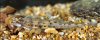 Microcambeva
ribeirae
Microcambeva
ribeiraeLive Specimen-Brazil, São Paulo State |
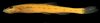 Microcambeva
ribeirae Microcambeva
ribeiraeLateral view-holotype-São Lourencinho River, Ribeira de Iguape River basin, Pedro Toledo, São Paulo, Brazil |
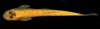 Microcambeva
ribeirae Microcambeva
ribeiraeDorsal view-holotype-São Lourencinho River, Ribeira de Iguape River basin, Pedro Toledo, São Paulo, Brazil |
 Microcambeva
ribeirae Microcambeva
ribeiraeVentral view-holotype-São Lourencinho River, Ribeira de Iguape River basin, Pedro Toledo, São Paulo, Brazil |
If you would like to contribute to the monthly factsheets with an article, information or photos, please e-mail me. You will of course be credited for your work.

If you would like to donate any denomination of monies to the site just click the above link button. All proceeds will go to running the site and hopefully to keep it going for a few years yet.

