SCOTCAT.COM
your internet guide to all things catfish
Acestridium triplax Rodríguez & Reis, 2007 |
Image contributors to this species: |
|
Daniel Pang (3) |
ScotCat Sources: |
|

Other Sources: |
|
|


Relevant Information: |
Description: Dorsal soft rays (total): 8; Anal soft rays: 6. Distinguished from all congeners in possessing one series of middle abdominal plates between the lateral abdominal plates (vs. middle abdominal plates absent in remaining species). Differs from Acestridium dichromum (the most similar species) in having a small and rounded snout-tip spatulate projection (vs. large and oval spatulate projection), a thick pectoral-fin spine without serrae or slightly serrated (vs. very thick and strongly serrated in the inner face), posterior most lateral abdominal plate small (vs. large), and preanal plate approximately rectangular, with short lateral projections (vs. preanal plate cross-shaped, with large lateral projections). Habitat: Inhabits small forest creeks which are usually shallow (0.3-1.0 m deep, 5-10 m wide), with sandy bottom, clear or slightly black water, moderate water current and dense aquatic and marginal vegetation. Aquarium Care: will need a fairly strong current in the aquarium. Not the easiest to care for so really a catfish for the more experienced Loricariid keeper, so would be better in a species tank on their own. Diet: Fine Vegetarian foods especially algae and small meaty foods such as brine shrimp nauplii. They rarely sit on the substrate but on leaf stalks and branches so they are especially difficult to feed. Etymology: The specific name triplax: tri– (L.), three; pláx, anything flat and broad (e.g., flat land, the ocean surface, but here used to mean plate), referring to three series of abdominal plates (compared with two in known congeners at the time). |
Common Name: |
None |
Synonyms: |
None |
Family: |
Loricariidae |
Distribution: |
South America: Lower Tapajós drainage, Pará, Brazil. Type locality: Municipio de Juruti, igarapé Mutum, tributary to Rio Aruã, a tributary to Rio Branco, a tributary to Rio Aripiuns, itself a tributary to the lower Rio Tapajós, 2°36'45''S, 56°11'37''W, Pará State, Brazil. |
Size: |
5.5cm. (2¼ins) |
Temp: |
25-29°c (77-85°f.) |
p.H. |
|
6.5-7.2. |
IUCN Red List |
Acestridium triplax is endemic to Brazil and is known only from streams in the Juruti region, lower Tapajós River basin, Pará state. Despite its restricted geographic distribution, the species is abundant and frequent in the area where it occurs, and collections carried out between 2002 and 2008 suggest that the population is stable. Thus, Acestridium triplax was categorised as Least Concern (LC), (IUCN 2022). |
Reference: |
|
Froese, R. and D. Pauly.
Editors. 2014. FishBase. World Wide Web electronic
publication. www.fishbase.org, ( 08/2014 ). |

Family: Loricariidae Back to Ident-A-Cat Click on Thumbnails |
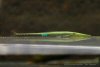 Acestridium
triplax Acestridium
triplax |
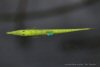 Acestridium
triplax Acestridium
triplaxDorsal view |
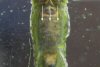 Acestridium
triplax Acestridium
triplaxVentral view of the one series of middle abdominal plates between the lateral abdominal plates |
If you would like to contribute to the monthly
factsheets with an article, information or photos, please e-mail
me. You will of course be credited for your work.

If you would like to donate any denomination of monies to the site just click the above link button. All proceeds will go to running the site and hopefully to keep it going for a few years yet.

