SCOTCAT.COM
your internet guide to all things catfish
Loricaria catirina Serejo-Saraiva, Piorski, Ottoni, Sabaj & Lima, 2026 |
Image contributors to this species: |
ScotCat Sources: |
|

Other Sources: |
|
|

Relevant Information: |
Description: Loricaria catirina is distinguished from its congeners, except L. coximensis, L. holmbergi, L. lundbergi, L. nickeriensis, L. parnahybae, L. pumila, L. spinulifera, and L. turi, by presence of polygonal, clearly separated plates in central abdominal region, interspersed by areas of naked skin and pectoral girdle covered by large, widely spaced plates (vs. abdominal region and pectoral girdle entirely covered by small, tightly packed plates without gaps;). Loricaria catirina differs from L. lundbergi by having greater basicaudal plate length (16.8%–27.6% vs. 9.96%–12.0% of HL); from L. spinulifera by having fewer oral papillae (14–16 vs. 20) and shallow, rounded postorbital notch (vs. well-developed, angular postorbital notch); from L. coximensis and L. nickeriensis by reaching larger body size (over 150 mm SL vs. 100 mm and 130 mm SL, respectively); from L. pumila by having higher number of lateral plates (33–34 vs. 31–32) and poorly developed odontodes on predorsal plates (vs. well-developed odontodes in predorsal region); from L. holmbergi by presence of shallow, rounded postorbital notch (vs. well-developed, angular postorbital notch); Loricaria catirina differs from L. parnahybae by having basicaudal plate length greater than interorbital width (vs. plate equal in size to interorbital width), and by higher number of oral papillae (14–16 vs. 8–12); from L. turi by smaller minimum orbital diameter (14.9–20.2% vs. 30.1–43.1% of snout length) and greater inter-nostril distance (17.1–20.8% vs. 10.16–16.6% of snout length), (Serejo-Saraiva et. al. 2026). Habitat: Loricaria catirina is only known from the middle and lower course of the Munim River, Maranhão State, Brazil, in the Cerrado savannah area. Aquarium Care: Soft substrate such as sand is beneficial. High oxygen levels, frequent water changes and strong filtration is called upon. Provide plants and bogwood for shelter. Diet: aufwuchs feeder. Etymology: The specific epithet ‘catirina’ honours Catirina, one of the main characters of the Bumba Meu Boi folkloric festival, a traditional cultural expression from the state of Maranhão, northeastern Brazil. Since 2019, the Bumba Meu Boi from Maranhão has been recognised by UNESCO as Intangible Cultural Heritage of Humanity. |
Common Name: |
None |
Synonyms: |
None |
Family: |
Loricariidae |
Distribution: |
South America: Munim River, Maranhão State, Brazil. |
Size: |
20.0cm. (8ins) |
Temp: |
25-29°c (77-85°f.) |
p.H. |
|
6.0-7.0. |
IUCN Red List |
Not Evaluated. |
Reference: |
Fish
in the News
2026 |

Family: Loricariidae Back to Ident-A-Cat Click on Thumbnails |
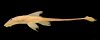 Loricaria
catirina Loricaria
catirinaHolotype-lateral view |
 Loricaria
catirina Loricaria
catirinaHolotype-dorsal view |
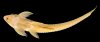 Loricaria
catirina Loricaria
catirinaHolotype-ventral view |
If you would like to contribute to the monthly factsheets with an article, information or photos, please e-mail me. You will of course be credited for your work.

If you would like to donate any denomination of monies to the site just click the above link button. All proceeds will go to running the site and hopefully to keep it going for a few years yet.

