SCOTCAT.COM
your internet guide to all things catfish
Panaque schaeferi Lujan, Hidalgo & Stewart, 2010 |
Image contributors to this species: |
Robin Warne (1) Andy Watson (2) Allan Sim (2) Johnny Jensen's Photographic Library (4) |
ScotCat Sources: |
|

Other Sources: |
|
|


Relevant Information: |
Description: The differences between the Panaqolus and the Panaque genera is that the latter has an oval shaped mouth and the jaws have very large spatulate teeth with a single cusp, arranged in a v form and Panaqolus have a small number of spatulate teeth and are also a smaller genus. Panaque schaeferi is diagnosed from all other P. (Panaque) by having body colour consisting of distinctly dark or faded black spots distributed evenly on pale gray to brown base colour (vs. body colour uniformly dark gray to brown or with alternating dark and light gray, brown, or black longitudinal stripes), and by having a maximum adult body size of approximately 600 mm SL (vs. no greater than approximately 400 mm SL); from all but P. nigrolineatus by having pelvic-fin spine terminating at posterior insertion of anal fin (vs. posterior or anterior to posterior insertion of anal fin); from P. armbrusteri, P. cochliodon, and P. suttonorum by pectoral-fin spine terminating coequally with anus (vs approximately halfway between pelvic-fin base and anus); from P. cochliodon by having brown to grey eyes in live specimens (vs. blue or bluish eyes in live specimens), and by juveniles up to approximately 129mm SL having a hyaline, anterior caudal-fin window (vs. caudal fin uniformly opaque). Aquarium Care: Bare in mind that this fish will produce a lot of waste due to its diet so will need a large external filter which will turn the tank contents around about six times in the hour and give it a good water flow. A fully grown individual would need a 7ft (210cm) tank or over for it to function properly. You will need driftwood or similar as this catfish likes to chew on it and its long stage survival depends on this. It will tend to hide during the day and come out at night and actively search out food. Diet: All Panaque (Panaqolus) are wood eaters so would need this in an aquarium set-up. Feed also vegetable foods such as cucumber, courgette (zucchini) and sinking tablets. Feeding information from image contributor, Andy Watson, "It loves courgette and catfish pellets and is very bold, always out looking for food and not shy at all". Remarks: See further information from the reference, Lujan et al. |
Common Name: |
L203, LDA065 |
Synonyms: |
None |
Family: |
Loricariidae |
Distribution: |
South America: Peru, Ucayali drainage to Colombia, (Leticia). Type Locality: Peru, Ucayali Department, Padre Abad Province, Aguaytia River drainage, Santa Ana River, Cordillera Azul National Park, 8u299510S, 75u339360W, 250 m elevation. |
Size: |
60.0cm. (24ins) |
Temp: |
24-29°c (75-85°f) |
p.H. |
|
6.0-7.5. |
Reference: |
|
Lujan, NK, M Hidalgo
& DJ Stewart, 2010. Revision of Panaque
(Panaque), with descriptions of three new species
from the Amazon basin (Siluriformes, Loricariidae).
Copeai 2010: 676–704. |

Family: Loricariidae Back to Ident-A-Cat Click on Thumbnails |
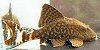 Panaque
schaeferi Panaque
schaeferi |
 Panaque
schaeferi Panaque
schaeferi |
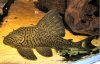 Panaque
schaeferi Panaque
schaeferi |
 Panaque
schaeferi Panaque
schaeferi |
 Panaque
schaeferi Panaque
schaeferi |
 Panaque
schaeferi Panaque
schaeferiAdult |
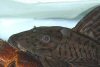 Panaque
schaeferi Panaque
schaeferiHead view |
 Panaque
schaeferi Panaque
schaeferiVentral view |
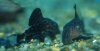 Panaque
schaeferi Panaque
schaeferiJuvenile |
If you would like to contribute to the monthly factsheets with an article, information or photos, please e-mail me. You will of course be credited for your work.

If you would like to donate any denomination of monies to the site just click the above link button. All proceeds will go to running the site and hopefully to keep it going for a few years yet.

