SCOTCAT.COM  

your internet guide to all things catfish
≡
  • HOME
  • FACTSHEETS
    • By Month/Year
    • By Family
    • by Genus
    • by Common Names
    • By Specific Names
    • By Continent
      • Index
      • Africa
      • Asia
      • Australasia
      • Europe
      • North America
      • South America
  • GALLERIES
    • Photo Gallery
    • Art Gallery
    • Movie Gallery
    • Stamps Gallery
  • FAMILIES
    • A-B
      • Ailiidae
      • Akysidae
      • Amblycipitidae
      • Amphiliidae
      • Anchariidae
      • † Andinichthyidae
      • Ariidae
      • Aspredinidae
      • Astroblepidae
      • Auchenipteridae
      • Auchenoglanididae
      • Austroglanididae
      • Bagridae
    • C-D
      • Callichthyidae
      • Cetopsidae
      • Chacidae
      • Clariidae
      • Claroteidae
      • Cranoglanididae
      • Diplomystidae
      • Doradidae
    • H-I
      • Heptapteridae
      • Heteropneustidae
      • Horabagridae
      • Ictaluridae
    • K-L-M
      • Kryptoglanidae
      • Lacantuniidae
      • Loricariidae
      • Malapteruridae
      • Mochokidae
    • N-P
      • Nematogenyidae
      • Pangasiidae
      • Phreatobiidae
      • Pimelodidae
      • Plotosidae
      • Pseudopimelodidae
    • R-S-T
      • Ritidae
      • Schilbeidae
      • Scoloplacidae
      • Siluridae
      • Sisoridae
      • Trichomycteridae
  • ARTICLES
    • Index
    • Breeding
    • By Author
    • Cat-Articles
    • General
    • Numbered List
    • Ichthyology
    • Travel/Collecting
  • IDENT-A-CAT
  • RESOURCES
    • Citation
    • Etymology
    • Fishhouse
    • Glossary
    • Scientific Papers
    • ScotShop
  • SITE MAP
  • FB GROUP
  • HELP
    • Index
    • Catfish Anatomy
    • Convertors
    • FAQ
    • Ident-A-Cat
    • Water Chemistry

Peckoltia amjikin de Araújo, F. A. A., Ferreira, M. F. C., Silva, A. N., & Wosiacki, W. B., 2025


Image contributors to this species:

Yann Fulliquet (3)

ScotCat Sources:

Etymology = Genus   Etymology = Specific name

Other Sources:

Search  Factsheet  Catalog of Fishes

Relevant Information:

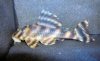
Description: Dorsal spines (total): 2; Dorsal soft rays (total): 7; Anal soft rays: 4. This species is distinguished from its congeners by the following set of characters: absence of spots or blotches on head and body; lower lips with rounded papillae; elongated odontodes on cheeks reaching the pectoral-fin spine when adpressed to body; space between the eyes not entirely covered by a blotch; parieto supraoccipital moderately elevated not forming an apparent crest; diminute plates with short odontodes on base of pectoral fins and anterior part of urogenital opening; prominent lateral wall of metapterygoid channel with sturdy base, including sinuous edges; adductor palatine crest forming a diminute, almost perceptible salient; upper and lower jaws with <25 teeth; seven saddles along the body; four oblique bars on body behind head, reaching further midventral plate rows series without fading; dark bars crossing membranes of dorsal fin; and yellow stripes of the head obliquely positioned on head, not larger than eye orbit. Body shape: elongated; Cross section: oval. Previously known as Peckoltia sp. 'Rio Tocantins' before description. Similar to L015 (P. vittata) from the Rio Xingu (Araújo, F.A.A et al. 2025). The Peckoltia genera possesses a medium sized mouth with the same amount of teeth in the lower and upper jaw. The lower end of the caudal fin is usually oblique and only slightly indented. Aquarium Care: No problem to keep and seem to be non-aggressive in a group of individuals. Should be kept in warm and soft to medium hard waters. Sexual Differences: Males have bristles behind the gill covers, on the pectoral fin spines and on the posterior part of the body. They also posses bristles on the upper caudal fin rays. Diet: Omnivores, easy to feed with frozen and live foods and also tablet and flake food. Should be kept at slightly higher temperatures and have a requirement for a higher oxygen intake. Etymology: The specific epithet ‘amjikin’ is treated as a noun in opposition. ‘Amji kin’ refers to a state of happiness for the Krahô people, speakers of the Timbira language (Macro-Jê trunk, Jês languages), and can be related to many cultural expressions within the Krahô's community, including singing, dancing, games, food bartering, and ceremonial rituals. The Krahôs are located east of the Tocantins State in Brazil.

Common Name:

None

Synonyms:

None

Family:

Loricariidae

Distribution:

South America: Rio Tocantins in São João do Araguaia city, PA, Brazil.

Size:

6.5cm. (2½ins)

Temp:

25-29°c (77-85°f)

p.H.

6.0-7.5.

IUCN Red List

Not Evaluated

Reference:

Araújo, F.A.A., M.F.C. Ferreira, A.N. Silva and W.B. Wosiacki, 2025. A new species of Peckoltia (Siluriformes, Loricariidae) from the rapids of the Rio Tocantins-Araguaia basin, Brazil. J. Fish Biol. 1-10.
Fish in the News 2025.
Seidel, I
. 2008. Back to Nature guide to L-catfishes, Ettlingen, Germany 208 p.


Back to Family page

Family: Loricariidae  Back to Ident-A-Cat  Click on Thumbnails

Click for full image Peckoltia amjikin
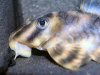
Head view
Click for full imagePeckoltia amjikin
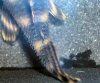
Male showing the hairy odontodes to rear of body


If you would like to contribute to the monthly factsheets with an article, information or photos, please e-mail me. You will of course be credited for your work.


Donate towards my web hosting bill!


If you would like to donate any denomination of monies to the site just click the above link button. All proceeds will go to running the site and hopefully to keep it going for a few years yet.

  • Facebook about us + contact us + citation + translate + site map + scotshop + glossary + etymology +
  • help YouTube

©2026 SCOTCAT.COM