SCOTCAT.COM
your internet guide to all things catfish
Peckoltia wernekei Armbruster & Lujan 2016 |
Image contributors to this species: |
Ivor Hilton (1) Elko Kinlechner (5) Tony Salter (2) |
ScotCat Sources: |
|

Other Sources: |
|


Relevant Information: |
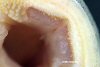
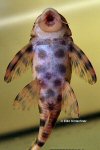
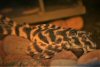
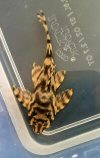
Description: Peckoltia wernekei can be separated from all other Peckoltia by having a broken black line of pigment on the upper jaw (vs. solid line of pigment along snout edge or snout uniformly colored or mottled). Peckoltia wernekei can be further separated from Peckoltia vittata by generally having 25 or more teeth in at least one dentary or one premaxilla (vs. generally 24 or fewer; one specimen of Peckoltia wernekei had both upper and lower jaws with <25 teeth / ramus), by having a largely naked abdomen (abdomen with a few plates below pectoral girdle, between pelvic fins and along sides of abdomen; vs. most of ventral surface from the throat to the anus with small plates), and by having large, faint blotches on the abdomen (vs. abdomen uniform). Peckoltia wernekei can be further separated from upper Orinoco congeners as follows: from Peckoltia brevis and Peckoltia lineola by lacking short lines and spots on the head (vs. lines and spots present), from Peckoltia brevis, Peckoltia caenosa and Peckoltia lineola by having a largely naked abdomen (vs. abdomen fully plated), and by generally having 25 or more teeth per jaw ramus (vs. 22 or fewer in Peckoltia brevis, 21 or fewer in Peckoltia caenosa, and 19 or fewer in Peckoltia lineola); from Peckoltia lujani by having the dentaries meet at an angle less than 90 ° (vs.> 90 °), by having large, faint blotches on the abdomen (vs. abdomen with no blotches), by a smaller internares width to interorbital width ratio (21.2 - 26.6 % vs. 28.5 - 46.5 %), and a larger dorsal spine to abdominal length ratio (148.1 - 178.6 % vs. 80.1 - 134.5 %); and from Peckoltia sabaji by having bands in the dorsal and caudal fins (vs. spots) and prominent dorsal saddles on the body (vs. large spots). Aquarium Care: Should be kept at slightly higher temperatures and have a requirement for a higher oxygen intake. Peaceful inhabitants of an aquarium. Sexual Differences: Males have bristles behind the gill covers, on the pectoral fin spines and on the posterior part of the body. They also posses bristles on the upper caudal fin rays. Diet: Omnivores, easy to feed with frozen and live foods and also tablet and flake food. Etymology: The specific name wernekei: Patronym honouring David C. Werneke, Collection Manager of Fishes at the Auburn University Museum, for his diligence, camaraderie and humour during three expeditions to the upper Orinoco Basin and for his long service as a Collection Manager at Auburn University. Remarks: Can still be found on some online searches by its synonym of Ancistomus wernekei. |
Common Name: |
Banded pleco, L243, LDA086 |
Synonyms: |
Ancistomus wernekei |
Family: |
Loricariidae |
Distribution: |
Venezuela: Rio Orionoco bei Minicia, Rio Ventuari (Amazonas). |
Size: |
20.0cm. (8ins) |
Temp: |
25-29°c (77-85°f) |
p.H. |
|
6.0-7.2. |
IUCN Red List |
This species has an extent of occurrence (EOO) of 7,312 km2 and a known area of occupancy (AOO) of 12 km2. It was recently discovered, which suggests that the AOO might increase with more sampling effort. There is continuing decline in habitat inferred based on the presence of logging activities and illegal gold mines within the distribution area. There is insufficient information to count threat-based locations. Therefore, this species is assessed as Near Threatened (IUCN 2019). |
Reference: |
Armbruster JW, Lujan
NK (2016) A new species of Peckoltia from
the Upper Orinoco (Siluriformes, Loricariidae). ZooKeys
569: 105-121. |

Family: Loricariidae Back to Ident-A-Cat Click on Thumbnails |
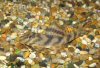 Peckoltia wernekei
 |
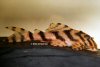 Peckoltia
wernekei Peckoltia
wernekei |
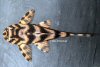 Peckoltia
wernekei Peckoltia
wernekeiDorsal view |
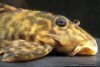 Peckoltia
wernekei Peckoltia
wernekeiHead view |
 Peckoltia
wernekei Peckoltia
wernekeiMouth view |
 Peckoltia
wernekei Peckoltia
wernekeiVentral view |
 Peckoltia
wernekei Peckoltia
wernekei |
 Peckoltia
wernekei Peckoltia
wernekeiDorsal view |
If you would like to contribute to the monthly factsheets with an article, information or photos, please e-mail me. You will of course be credited for your work.

If you would like to donate any denomination of monies to the site just click the above link button. All proceeds will go to running the site and hopefully to keep it going for a few years yet.

