SCOTCAT.COM
your internet guide to all things catfish
Acestridium discus Haseman, 1911 |
Image contributors to this species: |
Elko Kinlechner (4) |
ScotCat Sources: |
|

Other Sources: |
|
|


Relevant Information: |
Description: Species of Acestridium Haseman, 1911 are highly distinctive, small sized, specialized loricariid catfishes, which have very narrow body, snout prolonged with a distinctive anterior spatulate projection, and usually green colour in life. Acestridium was diagnosed by Schaefer (1991) based on the following characters: ten principal caudal-fin rays; plates at anterior snout margin forming conspicuous spatulate projection; head and body very slender, depressed; dorsal surface of head and trunk with longitudinal ridges; dorsal fin placed posteriorly, well beyond pelvic fin and just anterior to anal-fin origin; adipose fin absent; dermal plates anterior to first dorsal-fin proximal radial expanded, bearing ventromedial keel contacting the dorsal margin of the neural arches of the vertebrae six through twelve; and ridge of bone on the ventral surface of the lateral ethmoid contacting the metapterygoid channel reflected mesially. Currently, seven species of Acestridium are described: A. discus Haseman, 1911, A. dichromum Retzer, Nico & Provenzano, 1999, A. martini Retzer, Nico & Provenzano, 1999. A. triplax, Rodriguez & Reis, 2007, A. gymnogaster Reis & Lehmann, 2009, A. scutatum Reis & Lehmann A., 2009, and A. colombiense Retzer, 2005. Aquarium Care: will need a fairly strong current in the aquarium. Not the easiest to care for so really a catfish for the more experienced Loricariid keeper, so would be better in a species tank on their own. Diet: Fine Vegetarian foods especially algae and small meaty foods such as brine shrimp nauplii. They rarely sit on the substrate but on leaf stalks and branches so they are especially difficult to feed. Etymology: The specific name discus: Latin for disc or circular plate, referring to the expanded, disc-like tip of its snout. |
Common Name: |
None |
Synonyms: |
None |
Family: |
Loricariidae |
Distribution: |
South America: Lower Negro River basin, Brazil. Type locality: Igarapé de Cachoeira Grande, near Manaos, Brazil. |
Size: |
6.5cm. (2½ins) |
Temp: |
25-29°c (77-85°f.) |
p.H. |
|
6.5-7.2. |
IUCN Red List |
Acestridium discus is endemic to Brazil, being found in the Rio Negro basin. The species is widely distributed, frequent, abundant, and no significant threats have been detected that endanger its population. Therefore, Acestridium discus has been categorised as Least Concern (LC), (IUCN 2022). |
Reference: |
|
Chico Mendes Institute
for Biodiversity Conservation (ICMBio). 2022.
Acestridium discus. IUCN Red List of Threatened
Species 2022. |

Family: Loricariidae Back to Ident-A-Cat Click on Thumbnails |
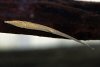 Acestridium
discus Acestridium
discus |
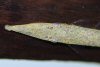 Acestridium
discus Acestridium
discusDorsal view head |
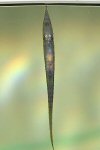 Acestridium
discus Acestridium
discusVentral view |
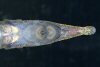 Acestridium
discus Acestridium
discusVentral view of mouth |
If you would like to contribute to the monthly
factsheets with an article, information or photos, please e-mail
me. You will of course be credited for your work.

If you would like to donate any denomination of monies to the site just click the above link button. All proceeds will go to running the site and hopefully to keep it going for a few years yet.

