SCOTCAT.COM
your internet guide to all things catfish
Pseudoplatystoma fasciatum (Linnaeus, 1766) |
Image contributors to this species: |
Allan James (1) Frants Lehmann (1 Stamp) Chris Ralph (2) Jean -Francois Helias (5) Devya Hemraj (1) |
ScotCat Sources: |
|
|


Other Sources: |
|


Relevant Information: |
Similar to Pseudoplatystoma tigrinum but this species has a striped pattern and P. fasciatum has the stripes more in the shape of a Y. The first specimen pictured here, was taken in The Port Doree Public Aquarium in Paris, France. The 5,6,7,8 & 9th images were taken in Thailand, Asia, where this Pim has now been introduced to large ponds and fishing lakes for sport fishing. In some quarters the synonym, P. punctifer, is classed as a species in its own right. This species and P. tigrinum are supposedly sympatric in the Amazon Basin. There has been 5 new species described by Buitrago-Suárez, U.A. and B.M. Burr in 2007, to go alongside P. tigrinum, P. fasciatum and P. corruscans. These species are P. punctifer (Castelnau), P. reticulatum Eigenmann & Eigenmann, P. orinocoensen, P. metaense, and P. magdaleniatum. So far P. punctifer is the only species that has not been accepted in some publications in print and on the internet. Aquarium Care: Its tank should have a shaded area at the back such as a large branch and plants to hide under as it is nocturnal, and also the lighting should not be too bright. Should not be kept with any fish that is smaller than itself and it also should be housed in a very large tank. The best companions would probably be large Pacu's or similar sized fish that would not be swallowed. In my opinion this wonderful looking Pim should only be kept in Public Aquariums as it can damage its large nose if kept in too confined an area, it can get jumpy too if feels its barbels on the tank sides as it turns around. It can also go of its food as well, if it is anyway disturbed. Diet: In their natural habitat they eat other fish such as characins and other catfish, they also eat freshwater crabs. In the aquarium a diet of earthworms, freshwater fish such as trout and also shrimp and prawns. You should only feed when it starts looking actively for it, as they will rest for a few days after feeding to digest their food. Etymology: The specific name fasciatum: Latin for banded, referring to vertical black-and-white stripes on sides. |
Common Name: |
Tiger shovelnose catfish |
Synonyms: |
Platystoma fasciatum, Platystoma punctifer, Platystoma truncatum, Pseudoplatystoma punctifer, Silurus fasciatus |
Family: |
Pimelodidae |
Distribution: |
South America: Amazon, Corantijn, Essequibo, Orinoco, and Paraná River basins (Lundberg & Littmann, 2003); Magdalena River basin. Type Locality: Brasilia, Surinami. |
Size: |
90.0cm. (36ins) |
Temp: |
24-28°C (75-83°F) |
p.H. |
|
6.5-8.0. |
IUCN Red List |
This species has a wide distribution in the Guiana Shield and therefore, is assessed as Least Concern. Despite the wide distribution of the species, it does face over-exploitation across much of its range and this should be monitored significant population changes, (IUCN 2023). |
Reference: |
Ballen, G.A.
2023. Pseudoplatystoma fasciatum. The IUCN
Red List of Threatened Species 2023. |

Family: Pimelodidae Back to Ident-A-Cat Click on Thumbnails |
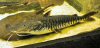 Pseudoplatystoma fasciatum |
 Pseudoplatystoma
fasciatum Stamp |
 Pseudoplatystoma
fasciatum |
 Pseudoplatystoma
fasciatum Head view |
 Pseudoplatystoma
fasciatum Caught in Thailand, Asia. |
 Pseudoplatystoma
fasciatum Caught in Thailand, Asia. |
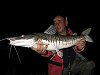 Pseudoplatystoma
fasciatum Caught in Thailand, Asia. |
 Pseudoplatystoma
fasciatum Head view |
 Pseudoplatystoma
fasciatum Showing gape of mouth |
 Pseudoplatystoma
fasciatum |
If you would like to contribute to the monthly factsheets with an article, information or photos, please e-mail me. You will of course be credited for your work.

If you would like to donate any denomination of monies to the site just click the above link button. All proceeds will go to running the site and hopefully to keep it going for a few years yet.

