SCOTCAT.COM
your internet guide to all things catfish
Ancharius fuscus Steindachner, 1880 |
Image contributors to this species: |
Peter Petersen (1) |
ScotCat Sources: |
|

Other Sources: |
|
|


Relevant Information: |
Description: Dorsal spines (total): 2; Dorsal soft rays (total): 6 - 7; Anal spines: 0; Anal soft rays: 14 - 15; Vertebrae: 44 - 46. Diagnosis: Ancharius fuscus is distinguished from other species of Anchariidae by the following unique characters: shorter snout, 40.1-45.8% of head length vs. 47.1-54.3; longer maxillary barbels, reaching to midpoint of pectoral-fin base vs. not reaching to base of pectoral spine; pectoral spine serrated along its entire posterior margin; vs. along distal half only; and purplish-gray colouration vs. highly mottled dark grey and cream, lead grey or mottled brownish-grey. It further differs from Ancharius griseus in having a shorter dorsal-fin spine, 14.6-22.6% of standard length vs. 22.9-24.3%; and larger eye, 11.4-15.4% of head length vs. 9.3-10.1%. Body shape (shape guide): fusiform / normal. Habitat: Ancharius fuscus is restricted to the middle to upper reaches of several river basins of the eastern coast of Madagascar and to habitats that are not highly degraded. Etymology: The genus name Ancharius: ánchi (Gr.), near, referring to its similarity to Arius (Ariidae). The specific name fuscus: Latin for dark or dusky, referring to “dirty dark” (translation) colour on top and sides (light violet on the bottom). |
Common Name: |
Vaona |
Synonyms: |
None |
Family: |
Anchariidae |
Distribution: |
Africa: Widely distributed along eastern-draining rivers of Madagascar. Type locality: Tohizona auf Madagascar. |
Size: |
22.0cm. (8¾ins) |
Temp: |
- |
p.H. |
- |
IUCN Red List |
Ancharius fuscus has by far the widest range of any member of the family, extending from the region of Maroansetra in the north, where the holotype was presumably collected (detailed locality data was not presented in original description), to the southeastern highlands; all other Anchariidae are known from only a single basin. However, despite this wide range in eastern Madagascar, population sizes/status are poorly known, and this is not a common species anywhere throughout its range. The prior assessment was Data deficient, however, the study of Ng and Sparks (2005) suggests that this species should be reassessed as Least Concern as the EOO is estimated at 63,000 km² and there is no indication of a significant population decline at this time, despite quite intensive fishing in the southern part of its range (IUCN 2016). |
Reference: |
Ferraris, C.J. Jr.,
2007. Checklist of catfishes, recent and fossil (Osteichthyes:
Siluriformes), and catalogue of siluriform primary
types. Zootaxa 1418:1-628. |

Family: Anchariidae Back to Ident-A-Cat Click on Thumbnails |
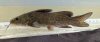 Ancharius
fuscus Ancharius
fuscus |
If you would like to contribute to the monthly factsheets with an article, information or photos, please e-mail me. You will of course be credited for your work.

If you would like to donate any denomination of monies to the site just click the above link button. All proceeds will go to running the site and hopefully to keep it going for a few years yet.

