SCOTCAT.COM
your internet guide to all things catfish
Carlarius heudelotii (Valenciennes, 1840) |
Image contributors to this species: |
Hippocampus Bildarchiv (1) Henk Heessen (3) |
ScotCat Sources: |
|

Other Sources: |
|
|


Relevant Information: |
Description: The rays of the fins are venomous and the wound inflicted is extremely painful. Demersal; brackish; marine; depth range 15 - 75 m. The sea catfish from Guinea are slow growing species which reach 40 to 42 cm (approximately one kilogram) at 6 years. The quite frequent observation in the landings of the canoe fishery of 80 cm individuals of A. latiscutatus and A. heudelotii, which are speculated to be 20 to 30 years old, indicates that their natural mortality is low. Their morphology, with a very hard skull and strong protective spines, as well as their habitat on muddy bottoms where turbidity is strong, probably protects them from predation. Habitat: Enters brackish waters; found along the shallow continental shelf. Reproduction: The females bare large eggs which are incubated and develop in the buccal cavity of the males. Their reproductive adaptativeness, with a small number of very big eggs (ariids have the largest eggs of any teleost group) protected by mouth incubation, also allows a large reduction in the early life mortality. Diet: Feeds on benthic invertebrates buried in the mud but it can sometimes leave the bottom to capture prey in open water. Etymology: The specific name heudelotii: In honour of Heudlott, a French botanist. Remarks: It has to be noted that Marceniuk & Menezes (2007) have placed this species in a new Genera, Carlarius, named for Carl Ferraris for his contribution to the knowledge of Siluriformes fishes and includes the seven known Arius species from the west African coastline. Arius heudeloti Valenciennes, 1840, is the type species. |
Common Name: |
Smoothmouth sea catfish |
Synonyms: |
Tachysurus heudelotii, Bagrus goreensis, Tachysurus mercatoris, Arius mercatoris, Arius heudelotii. |
Family: |
Ariidae |
Distribution: |
West coast of Africa: From Mauritania to Gabon and, possibly, to Angola; in marine waters and estuaries. Type locality: haut Sénégal. |
Size: |
76.0cm.TL (2ft 6¼ins) |
Temp: |
20-27°c (67-81°f) |
p.H. |
|
6.5-8.0. |
IUCN Red List |
This species is relatively widespread within western Africa, from Cote d'Ivoire to Cameroon. It mainly occurs in the Niger and Volta basins, and it appears sparsely distributed within its range and may be rare. Population information is lacking outside of the Volta basin, and the overall population size and trend is unknown. Within the Volta basin this species is declining due to the impacts of heavy fishing pressure, pollution and invasive species. This species is assessed as Data Deficient due to the unknown impact of these threats on populations outside of the Volta and the magnitude of the population decline overall. Research is urgently needed to confirm the population status throughout its range (IUCN 2020). |
Reference: |
Betancur, R., Marceniuk,
A.P., de Morais, L., Sagna, A., Djiman, R., Carpenter,
K.E., Camara, K., Nunoo, F., Sidibé, A, Williams,
A.B., Sylla, M., Lindeman, K., Montiero, V. &
Quartey, R.
2015. Carlarius heudelotii. The IUCN Red
List of Threatened Species 2015. |

Family: Ariidae Back to Ident-A-Cat Click on Thumbnails |
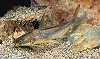 Carlarius
heudelotii |
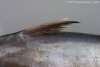 Carlarius
heudelotii Dorsal |
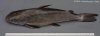 Carlarius
heudelotii |
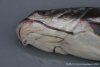 Carlarius
heudelotii Head view |
If you would like to contribute to the monthly factsheets with an article, information or photos, please e-mail me. You will of course be credited for your work.

If you would like to donate any denomination of monies to the site just click the above link button. All proceeds will go to running the site and hopefully to keep it going for a few years yet.

