SCOTCAT.COM
your internet guide to all things catfish
Neoarius berneyi (Whitley, 1941) |
Image contributors to this species: |
Andrew Hall (2) Johnny Jensen's Photographic Library (1) |
ScotCat Sources: |
|

Other Sources: |
|
|


Relevant Information: |
The Australian species of the Ariidae family have been revised and placed in a new genus, Neoarius. "Neo" meaning new in Latin. Description: Dorsal spines (total): 1; Dorsal soft rays (total): 7; Anal spines: 0; Anal soft rays: 16 - 19. The species of Neoarius can be differentiated from all other genera of Ariidae by the combination of two shared characters: (1) lateral face of third pharyngobranchial conspicuous and acute (shared with Arius, Brustiarius, Nedystoma, Netuma, Plicofollis and Potamosilurus); (2) anterior process of first pharyngobranchial on the central part of this bone (shared with Netuma). Habitat: Occurs in rivers and smaller streams, frequently in slow-flowing, turbid conditions, and also in lakes and lagoons. Sometimes found in brackish estuaries. Diet: Feeds on aquatic plants, benthic crustaceans, insect larvae, bottom detritus and also fishes. Etymology: The genus name Neoarius: Neo means "new" in latin and Arius is Derived from the Greek word Apelos (pronounced Araios) which means "sanctified by the god of war", and refers to the bony structure extending from the skull covering to the powerful thorn of the first dorsal fin ray. The specific name berneyi: after ornithologist, F. L. Berney. |
Common Name: |
Lesser Salmon Catfish, Highfin Catfish |
Synonyms: |
Tachysurus berneyi, Arius cleptolepis, Arius berneyi |
Family: |
Ariidae |
Distribution: |
Oceania: Northern Australia, inhabits coastal rivers and streams in the Gulf of Carpentaria and northern areas of the Northern Territory as far west as the Mary River system, and New Guinea. Type locality: Pools of Flinders River, near Hughender and Richmond, Queensland, Australia. |
Size: |
45.0cm. (18ins) |
Temp: |
20-30°c (67-87°f) |
p.H. |
|
6.5-8.0. |
Reference: |
Froese, R. and D. Pauly.
Editors. 2009. FishBase. World Wide Web electronic
publication. www.fishbase.org, version (05/2009). |

Family: Ariidae Back to Ident-A-Cat Click on Thumbnails |
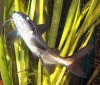 Neoarius
berneyi Neoarius
berneyi |
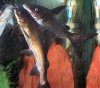 Neoarius
berneyi Neoarius
berneyi |
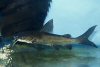 Neoarius
berneyi Neoarius
berneyi |
If you would like to contribute to the monthly factsheets with an article, information or photos, please e-mail me. You will of course be credited for your work.

If you would like to donate any denomination of monies to the site just click the above link button. All proceeds will go to running the site and hopefully to keep it going for a few years yet.

