SCOTCAT.COM
your internet guide to all things catfish
| Collecting Venezuela |
by Shane Linder |
Sat.
2 Sept. 2000.
The next collecting location was the Rio Pao just outside of San Sabastian. The Rio had a small amount of current and was muddy brown with sediment (as are most rivers in the wet season). The water temp was near 80F and the Rio was about 15-20 feet wide. The typical depth was 6-12 inches with deep areas near cutbanks. By running a four foot by four foot seine along the shallows I was able to collect wild guppies and a number of cichlids. I seined the outside cutbanks where there were many overhanging land plants and managed to collect a fair number of Farlowella. The water was about two feet deep on the outside banks. Also collected was a small (2 inch) Hypostomus sp. This fish was collected from the center of the creek in the strongest rapids by basically pure luck. It got caught in my net as I was crossing the river. I continued up the mountains towards Caracas and stopped to sample the Rio Zuata in the village of San Casimiro. The collecting site was beautiful. A crystal clear mountain stream with a bed of fist-sized rocks. By seining near the banks I turned up pike cichlids, Hoplias, and a small species of tetra. In the main rapids I was able to collect a Chaetostoma sp. by kick seining. Although this was the most beautiful place to collect, it was also difficult. In the clear water the fishes could see me from far away and scatter. I saw many loricariids (sp. unknown) scramble away from me. I plan to try this site again with a 12 seine which should work much better.
Mon.
4 Sep. 2000. The last highlight of this spot was that I collected a huge (7-8 inches SL) Hypostomus. This fish was collected against the mud bank at the confluence of the creek and the river. Several small cichlids were collected as well, but no tetras. This past Saturday (9 Sep 2000) I headed south to Embalse Camatagua about 1.5 hours from Caracas. Camatagua is a huge reservoir famous for peacock bass (various Cichla spp. and not Bass at all) fishing. I scouted out the area where the Rio Guarico exits the lake and it was teeming with fish. The main problem with collecting there was that the river is choked with aquatic vegetation. The vegetation is mainly Elodea, but there are many other species of plants growing here. I headed south along the lake to a small creek not on the map. The creek appears to be a small tributary of the Rio Camatagua and is referred to by the locals as Quebrada Camataguita (translation: little Camatagua stream). A bridge crosses the stream and provides a nice collecting location. Two small boys were on the bridge fishing with a tiny hook and what looked like large bloodworms for bait. They had collected a cichlid lovers dream with their little hooks. Most of their catch were large tetras, Acara, pike cichlids, and what appeared to be Biotodoma and Festivums. There were also spp. of cichlid that I could not identify and Hoplias. Collecting the stream with a 4 foot seine turned up numerous species of cichlids and tetras. The catch of the day was a small Rineloricaria-type loricariid about three inches in length. There were also various Leoprinus-looking fishes that proved too fast to capture. I came across one large (six inch) Hypostomus species but could not catch it. The fish kept moving around a large rock in the middle of the stream and I kept chasing it around the rock, but the pleco was always faster than I. Also, at this location I caught some large (2-3 inch) freshwater shrimps. The water in this location was crystal clear with a stream bed of gravel and small rocks. The stream was 4-6 feet wide in the riffles with a pool every 10-15 feet. The pools were 15-30 feet in diameter and from 2-4 feet deep. They were home to the various cichlids and many tetras. Other tetras, pike cichlids, loricariids, and hoplias were also found mainly in the riffle sections. The water was very warm (about 80F) except in a few shaded pools that were no longer connected to the main stream. These pools turned up guppies, a few small cichlid fry, and a young Hoplias about 2 inches long. The temperature in the shaded pools was about 76F. I took video footage of the stream and the fishes collected before returning them to the creek. I hope to return to this location soon with a scuba mask and a large hand net in hopes of snorkeling the pools and collecting from them. They are too deep to be collected with a small seine. I also am convinced that I need to modify my nets with larger heavier weights on the bottom. Since so many loricariids stay so close to substrate, they often swim right under my net. Hopefully larger weights will better anchor the net to the substrate and prevent some of this.
|
 ello
all, Just thought I would relay some of my collecting
notes from this weekend. Later, I will write
up a description of the terrain since understanding
the terrain is necessary to understanding the aquatic
habitats.
ello
all, Just thought I would relay some of my collecting
notes from this weekend. Later, I will write
up a description of the terrain since understanding
the terrain is necessary to understanding the aquatic
habitats. 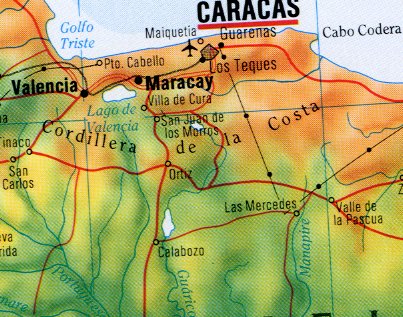


If you would like to contribute an article, please e-mail me. You will of course be credited for your work.
If you would like to donate any denomination of money to the site just click the above link button. All proceeds will go to running the site and hopefully to keep it going for a few years yet.
Print or e-mail this factsheet below


