SCOTCAT.COM
your internet guide to all things catfish
Auchenipterichthys coracoideus (Eigenmann & Allen, 1942) |
Image contributors to this species: |
Rogers Aquaria (1) Allan James (1) Chris Ralph (3) Daniel Blom (1) Yann Fulliquet (3) |
ScotCat Sources: |
|
|


Other Sources: |
|


Relevant Information: |
This widespread Amazonian species, that had been misidentified in the past as A. thoracatus, and is instead A. coracoideus; a species that comes from the waters of the Amazon River basin and the Araguaia River in the the Tocantins basin while Auchenipterichthys thoracatus is found in the upper Madeira River basin. Reproduction: This family practice internal fertilisation with the female depositing the fertilized eggs on aquatic vegetation with no care of the eggs shown. An unsuccessful breeding report states that the male swims behind the female and they suddenly lock their pectoral, female's adipose and caudal fin. They speed around the tank and are oblivious to anything around them. After this confrontation they break apart and fall to the aquarium floor where they sit for a couple hours in a "dazed" condition. Aquarium Care: Good community catfish with normal sized patrons but not to be trusted with small Tetras for instance, which will be picked of at night on its twilight patrols. Diet: Can be fed most aquarium fare such as good quality flake, white worm, tablet and pellet foods and frozen foods such as bloodworm. Better to feed at lights out until they get accustomed to the daytime feeding regime when they may very well join in. |
Common Name: |
Midnight Catfish, Zamora Cat |
Synonyms: |
Trachycorystes coracoides |
Family: |
Auchenipteridae |
Distribution: |
South America: Amazon River basin and Araguaia River of the Tocantins basin. Type locality: Iquitos, Peru. |
Size: |
13.5cm. (5¼ins) |
Temp: |
23-25°c (73-77°f.) |
p.H. |
|
6.5-7.2. |
Reference: |
|
Carl J. Ferraris Jr.,
Richard P. Vari, and Sandra J. Raredon.
Catfishes of the genus Auchenipterichthys (Osteichthyes:
Siluriformes: Auchenipteridae); a revisionary study. |

Family: Auchenipteridae Back to Ident-A-Cat Click on Thumbnails |
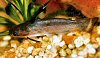 Auchenipterichthys
coracoideus Auchenipterichthys
coracoideus |
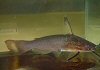 Auchenipterichthys
coracoideus Auchenipterichthys
coracoideus |
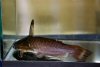 Auchenipterichthys
coracoideus Auchenipterichthys
coracoideus |
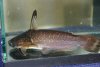 Auchenipterichthys
coracoideus Auchenipterichthys
coracoideus |
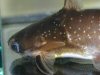 Auchenipterichthys
coracoideus Auchenipterichthys
coracoideusHead view |
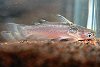 Auchenipterichthys
coracoideus Auchenipterichthys
coracoideus |
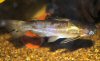 Auchenipterichthys
coracoideus Auchenipterichthys
coracoideus |
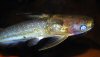 Auchenipterichthys
coracoideus Auchenipterichthys
coracoideus |
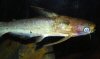 Auchenipterichthys
coracoideus Auchenipterichthys
coracoideus |
If you would like to contribute to the monthly factsheets with an article, information or photos, please e-mail me. You will of course be credited for your work.

If you would like to donate any denomination of monies to the site just click the above link button. All proceeds will go to running the site and hopefully to keep it going for a few years yet.

