SCOTCAT.COM
your internet guide to all things catfish
Centromochlus schultzi (Rössel, 1962) |
Image contributors to this species: |
Rare Aquatics (1) Haakon Haagensen (1) Johnny Jensen's Photographic Library (3) Dimitris Lysikatos (1) Mario Pinherio (1) |
ScotCat Sources: |
|
|

Other Sources: |
|


Relevant Information: |
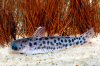
Mees (1974) assigned this species to Tatia but Ferraris (2007) reverted it back to the original genera of Centromochlus. Just recently (September 2019) due to earlier work carried out by U.K. aquarist and amateur ichthyologist Steven Grant (2015) a new paper was released by Bárbara B. Calegari et al whereas this species (C. schultzi), Tatia carolae Vari & Ferraris, 2013 and C. macracanthus Soares-Porto, 2000 were reclassified to a new genus, Balroglanis. In 2021 this species was reclasified back to the original genus of Centromochlus by Coelho, F. L., C. C. Chamon and L. M. Sarmento-Soares. Reproduction: They leave their eggs in a gelatinous mass under stones or bogwood. As of this family the male will fertilise the female internally. Aquarium Care: Keeping this species is not too much of a problem as long as the water is kept clean and not too alkaline with a p.H.of between 6.5 and 7.0. They do like a planted aquarium where they like to hide during the day. Also provide pipework for this genera for a choice of hiding places. Diet: In its native habitat they feed on insects, mostly ants, beetles, and mayflies and in the aquarium they will eat anything given such as frozen bloodworm which they will come out of hiding to feed on, catfish tablets, daphnia, white worm (sparingly) and any other worm-like foods. Etymology: Balroglanis: Meaning "Balrog Catfish" and is derived from the Maia, a Balrog known as Durin's Bane, who terrorised Durin the Deathless' descendants in Khazad-dûm, in J. R. R. Tolkien's Lord of the Rings legendarium. |
Common Name: |
None |
Synonyms: |
Tatia schultzi, Balroglanis schultzi |
Family: |
Auchenipteridae |
Distribution: |
Brazil: Upper Xingu and Tocantins River basins. Type locality: Brasilien, oberer Rio Xingu. |
Size: |
10.0cm. (4ins) |
Temp: |
22-25°c (71-77°f.) |
p.H. |
|
6.0-7.0. |
IUCN Red List |
Centromochlus schultzi is endemic to Brazil and widely distributed in the Xingu, Tocantins, upper Madeira, and upper Tapajós river basins. It is a naturally common but infrequent species, occurring in small and medium-sized streams. Despite several hydroelectric projects in the region, C. schultzi has been recorded upstream of the Lajeado hydroelectric plant reservoir. Because no significant threats to its population have been detected, Centromochlus schultzi has been classified as Least Concern (LC), (IUCN 2022). |
Reference: |
|
Bárbara B Calegari,
Richard P Vari, Roberto E Reis, 2019. Phylogenetic
systematics of the driftwood catfishes (Siluriformes:
Auchenipteridae): a combined morphological and molecular
analysis, Zoological Journal of the Linnean Society,
, zlz036. |

Family: Auchenipteridae Back to Ident-A-Cat Click on Thumbnails |
 Centromochlus
schultzi Centromochlus
schultzi |
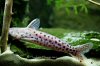 Centromochlus
schultzi Centromochlus
schultzi |
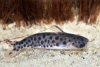 Centromochlus
schultzi Centromochlus
schultzi |
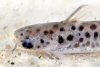 Centromochlus
schultzi Centromochlus
schultziHead view |
 Centromochlus
schultzi Centromochlus
schultzi |
 Centromochlus
schultzi Centromochlus
schultzi |
 Centromochlus
schultzi Centromochlus
schultzi |
If you would like to contribute to the monthly factsheets with an article, information or photos, please e-mail me. You will of course be credited for your work.

If you would like to donate any denomination of monies to the site just click the above link button. All proceeds will go to running the site and hopefully to keep it going for a few years yet.

