SCOTCAT.COM
your internet guide to all things catfish
Centromochlus sp. 'Peru' |
Image contributors to this species: |
Allan James (3) |
ScotCat Sources: |
|
|

Other Sources: |
|

Relevant Information: |
Mees (1974) assigned this species to Tatia but Ferraris (2007) reverted it back to the original genera of Centromochlus. Just recently (September 2019) due to earlier work carried out by U.K. aquarist and amateur ichthyologist Steven Grant (2015) a new paper was released by Bárbara B. Calegari et al whereas this species of Centromochlus, Tatia carolae Vari & Ferraris, 2013, C. schultzi (Rössel, 1962) and C. macracanthus Soares-Porto, 2000 were reclassified to a new genus, Balroglanis. In 2021 these species were reclasified back to the original genus of Centromochlus by Coelho, F. L., C. C. Chamon and L. M. Sarmento-Soares. Aquarium Care: Keeping this species is not too much of a problem as long as the water is kept clean and not too alkaline with a p.H. of between 6.0 and 7.0. They do like a planted aquarium where they like to hide during the day. Also provide pipework for this genera for a choice of hiding places. Sexual Differences: The sexes can be distinguished best by the shape of the maxillary barbels, these barbels are curved in males, straight in females. Mature males also have a modified anal fin, similar to that of other species in this family. Diet: In its native habitat they feed on small invertebrates and crustaceans and in the aquarium they will eat anything given such as frozen bloodworm, catfish tablets, white worm (sparingly), prawns and shrimp. Etymology: The genus name Centromochlus: kentron, thorn or spine; mochlus, lever or crowbar, presumably referring to the strongly serrated dorsal-fin spine. |
Common Name: |
None |
Synonyms: |
None |
Family: |
Auchenipteridae |
Distribution: |
South America: Rio Madre de Dios basin, southern Peru. |
Size: |
10.5cm (4¼ins) |
Temp: |
24-28°c (75-83°f.) |
p.H. |
|
6.0-7.0. |
Reference: |
|
Grant, S.
(2021): Banjos, Dorads and Woodcats. Aspredinidae,
Doradidae and Auchenipteridae Catfishes. ATS-Aquashop,
Neustadt am Rübenberge: 1-300. |

Family: Auchenipteridae Back to Ident-A-Cat Click on Thumbnails |
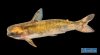 Centromochlus
sp. 'Peru' Centromochlus
sp. 'Peru' |
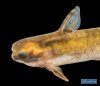 Centromochlus
sp. 'Peru' Centromochlus
sp. 'Peru'Head view |
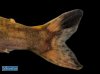 Centromochlus
sp. 'Peru' Centromochlus
sp. 'Peru'Caudal view |
If you would like to contribute to the monthly factsheets with an article, information or photos, please e-mail me. You will of course be credited for your work.

If you would like to donate any denomination of monies to the site just click the above link button. All proceeds will go to running the site and hopefully to keep it going for a few years yet.

