SCOTCAT.COM
your internet guide to all things catfish
Austroglanis sclateri (Boulenger, 1901) |
Image contributors to this species: |
Gareth Roocroft (2) Roger Bills (2) Russel Brian Tate (2) |
ScotCat Sources: |

Other Sources: |
|


Relevant Information: |
Sedimentation, particularly because of erosion in the upper Orange, Caledon and some Vaal catchments is a major threat to their rocky habitats. Dams and weirs probably affected the species negatively in the past, but the current influence is unsure. Pollution in Gauteng Province may have caused extinction in some small tributaries of the Vaal River. Habitat: Occurs in rocky habitats in flowing water, favoring rapids. Feeds on invertebrates, especially insects, taken from rock surfaces; larger specimens also take small fish. Rarely caught by anglers. This larger Austroglanis species will probably never be imported to our aquariums due to the above limitations. Aquarium Care: I have kept all three species in aquaria – all quite difficult to maintain in good condition. Best results were with A. barnardi – I had them in a recirculating circular tank. Packed peat into the filter and pushed the pH right down (Roger Bills). Diet: Fed them on worms mostly although I assume they generally eat chironomids, mayflies and caddis mostly in the wild. They were very aggressive with each other and seemed to maintain territories (Roger Bills). Etymology: The genus name Austroglanis: auster, south wind, being the most southerly distributed catfishes in Africa; glanis, sheatfish (Silurus glanis), now used as a general term for catfish. The specific name sclateri: in honour of William Lutley Sclater (1863-1944), Director, South African Museum, who supplied type. |
Common Name: |
Common Rock Catfish |
Synonyms: |
Gephyroglanis sclateri |
Family: |
Austroglanididae |
Distribution: |
South Africa: Orange-Vaal River basin, in major tributaries and main river channel. Also found in Lesotho and Namibia. Type locality: Vaal River, South Africa. |
Size: |
30.0cm (12ins) |
Temp: |
- |
p.H. |
|
- |
IUCN Red List |
The species is widespread, in the Orange-Vaal River System of Southern Africa. It is however restricted to suitable habitat (rocky riffles, rapids and runs) within its overall range. There is little or no information available on small-scale distribution patterns, movement between possible suitable habitats or on population trends. However, its wide distribution suggests that criterion B is not applicable. There is no reliable information about population trends. Decline and possible extirpation from some tributaries of the Vaal River in the last 10 years may have occurred in Gauteng Province, but this is over a relatively restricted area compared to its overall range. Therefore, criterion A is not applicable. The species seems to occur in low numbers, but due to its wide range, overall population size is expected to be larger than 10,000 individuals. Therefore, criteria C and D are not applicable. No quantitative analysis has been done for this species. Therefore, criterion E is not applicable. There is concern, that the species is uncommon across its range, except in rivers that provide good habitat and water quality. Habitat alteration by weirs and dams and pollution (especially in tributaries of the Vaal River) have caused local declines and possibly even local extirpations. However, the wide distribution and therefore relatively large overall population size of this species precludes it from qualifying against any of the criteria thresholds, and it is therefore assessed as Least Concern (LC). This assessment was originally assessed in 2007 as Least Concern and was reviewed in 2016, new information since the 2007 assessment of this species has not resulted in a change in status and the species remains Least Concern (IUCN 2017). |
Reference: |
Bills R. pers.
comm. |

Family: Austroglanididae Back to Ident-A-Cat Click on Thumbnails |
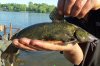 Austroglanis
sclateri |
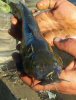 Austroglanis
sclateri |
 Austroglanis
sclateri |
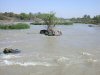 Austroglanis
sclateri Vaal River. Deep river channels always in the main stream channels. Turbid flows typically–very different from the clear water Olifants systems |
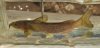 Austroglanis
sclateri Lower Orange River, South Africa |
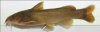 Austroglanis
sclateri |
If you would like to contribute to the monthly factsheets with an article, information or photos, please e-mail me. You will of course be credited for your work.

If you would like to donate any denomination of monies to the site just click the above link button. All proceeds will go to running the site and hopefully to keep it going for a few years yet.

