SCOTCAT.COM
your internet guide to all things catfish
Denticetopsis sauli Ferraris, 1996 |
Image contributors to this species: |
Mark Henry Sabaj (1) |
ScotCat Sources: |
|
|

Other Sources: |
|


Relevant Information: |
Description:
Distinguished from all of its congeners with
the exception of D. royeroi by the combination
of the possession of elongate, symphyseal teeth on
the dentary, a reduced lateral line not extending
posteriorly on the body beyond the abdomen, an edentulous
vomer, a dorsal fin with only 4 segmented rays and
without a spinous first fin ray, an obliquely-truncate
margin on the caudal fin, and the lack of horizontally-elongate,
stellate, dark chromatophores when the chromatophores
are expanded. Denticetopsis sauli is distinguished
from D. royeroi by the posterior extent of
the margin of the maxilla (extending at least one
eye diameter past the posterior margin of the orbit
versus extending only slightly beyond the posterior
margin of the orbit, respectively), the body depth
(17.1-19.5 of SL versus 23% of SL, respectively),
and the extent of the membranous connection between
the caudal and anal fins (membrane distinctly incised
versus without a distinct notch, respectively). Etymology:
The specific name sauli: In honour of William
G. Saul (b. 1944), collection manager of the Ichthyology
Department of the Academy of Natural Sciences of Philadelphia,
who participated in the collection of the type series
and brought this species to the author’s attention |
Common Name: |
None |
Synonyms: |
None |
Family: |
Cetopsidae |
Distribution: |
South America: Around mouth of Pamoni River, Venezuela; known only from type series. Type locality: Venezuela, Estado Amazonas, Outflow stream from series of morichales, ca. 5.0 km from mouth of Río Pamoni, 2º48'N, 65º53'W. |
Size: |
2.5cm. (1ins) |
Temp: |
22-28°c (71-83°f) |
p.H. |
|
6.0-7.0. |
Reference: |
Ferraris, C.J. Jr.,
2007. Checklist of catfishes, recent and fossil (Osteichthyes:
Siluriformes), and catalogue of siluriform primary
types. Zootaxa 1418:1-628. |

Family: Cetopsidae Back to Ident-A-Cat Click on Thumbnails |
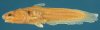 Denticetopsis sauli
 |
If you would like to contribute to the monthly factsheets with an article, information or photos, please e-mail me. You will of course be credited for your work.

If you would like to donate any denomination of monies to the site just click the above link button. All proceeds will go to running the site and hopefully to keep it going for a few years yet.

