SCOTCAT.COM
your internet guide to all things catfish
Oxydoras sifontesi Fernández-Yépez, 1968 |
Image contributors to this species: |
Johnny Jensen's Photographic Library (4) Mark Henry Sabaj (1) |
ScotCat Sources: |
|
|

Other Sources: |
|


Relevant Information: |
Similar looking to Oxydoras niger from the Amazon region but grows to a smaller adult size and has more of a grey body with black fins. Habitat: Occurs over mud in streams and lakes and forms schools. Diet: Feeds on detritus, chironomid and ephemeropteran larvae, and crustaceans. One of the main characteristics of the doradids is the presence of thorn like projections along the side of the body, which are known as scutes. These scutes are very sharp, so care should be taken when moving these fish. A real “Tank buster” if ever there was one. Aquarium Care: Quite a character obviously suited to large accommodation especially if keeping a number of fish together. Peaceful towards other fish and members of its own kind with doradids such as Agamyxis pectinifrons (Spotted Dora), Platydoras costatus (Striped Dora), Oscars and any other fish of a compatible size. Large pieces of bogwood and clean plastic drainpipe of suitable diameter for them to hide under. Ideally heater guards should be provided in order for the fish not to burn themselves. Etymology: The specific name sifontesi: In memory of Venezuelan meteorologist-hydrologist Ernesto Sifontes (1881–1959), who devoted much of his life to studying the Río Orinoco, where this catfish occurs. |
Common Name: |
Black Talking Catfish |
Synonyms: |
Hildadoras orinocensis |
Family: |
Doradidae |
Distribution: |
South America: Orinoco River basin. Type locality: Laguna rebalsera “El Medio,” Ciudad Bolívar, Venezuela. |
Size: |
70.0cm (28ins) |
Temp: |
21-24°C (70-75°F) |
p.H. |
|
6.0-7.8. |
Reference: |
Ferraris, C.J. Jr.,
2007. Checklist of catfishes, recent and fossil (Osteichthyes:
Siluriformes), and catalogue of siluriform primary
types. Zootaxa 1418:1-628. |

Family: Doradidae Back to Ident-A-Cat Click on Thumbnails |
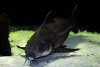 Oxydoras sifontesi
 |
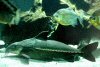 Oxydoras
sifontesi Oxydoras
sifontesi |
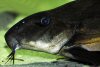 Oxydoras
sifontesi Oxydoras
sifontesiHead view |
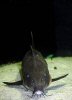 Oxydoras
sifontesi Oxydoras
sifontesi |
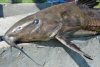 Oxydoras
sifontesi Oxydoras
sifontesiHead view |
If you would like to contribute to the monthly factsheets with an article, information or photos, please e-mail me. You will of course be credited for your work.

If you would like to donate any denomination of monies to the site just click the above link button. All proceeds will go to running the site and hopefully to keep it going for a few years yet.

