SCOTCAT.COM
your internet guide to all things catfish
FACTSHEETS: May 2024 - no. 335
Olyra longicaudata McClelland, 1842 |
In a few publications the genus Olyra has been placed in its own family Olyridae: sub family Olyrinae. The family was erected by Hora in 1936. Mo (1991) revised the Bagridae family and proposed a new classification for Olyra. He classed on a cladistic pattern focusing on osteological characters. On the basis of his cladogram of the Bagridae family it was found the Olyra is deeply nested within other bagrid genera and as such cannot be retained as a separate family.
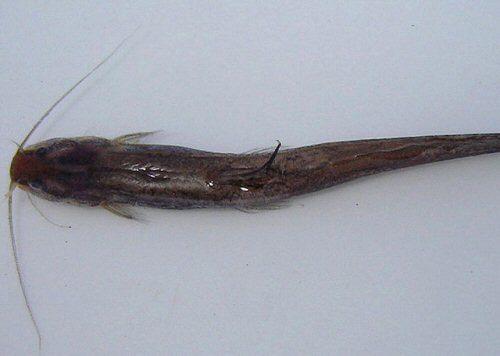
Olyra longicaudata - dorsal view
The background on McClelland who discovered this species tells us that Sir John McClelland (1805–1883) was a British medical doctor with interests in geology and biology, who worked for the East India Company. McClelland was appointed in 1836 as the secretary of the "Coal Committee", the forerunner of the Geological Survey of India (GSI), formed to explore possibilities to exploit Indian coal. He was the first to propose hiring professional geologists for the task. He was also involved in surveys of forests and his reports led to the establishment of the Forest Department in India. He also served as an interim superintendent of the Calcutta Botanical Garden from 1846 to 1847 and was editor of the Calcutta Journal of Natural History from 1841 to 1847. He also communicated with Charles Darwin with his many letters of correspondence.
|
 he common name of the Asian Fighting Catfish may just
tell you a little bit about the nature of this months
subject on our Factsheet of the month series for May
2024.
he common name of the Asian Fighting Catfish may just
tell you a little bit about the nature of this months
subject on our Factsheet of the month series for May
2024. 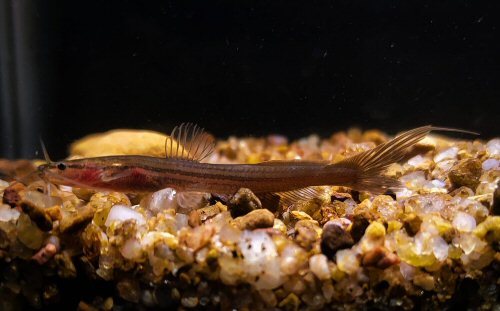
Common Name |
Asian Fighting Catfish, Bannertail Catfish |
Synonyms |
Olyra longicaudatus, Olyra kempi |
Family |
Bagridae |
Subfamily |
- |
Distribution |
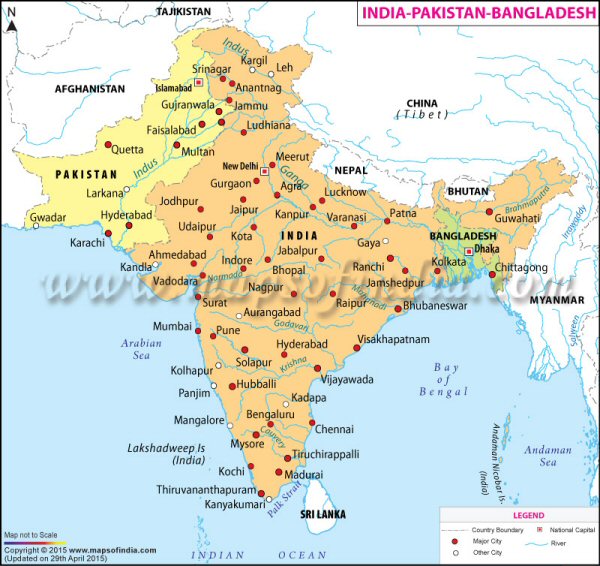
Asia: India and Bangladesh. Base of Darjelling Himalaya, Assam, India; Tenassarim, Myanmar. Type locality: Kaysah Mountains. |
Size |
11.0cm (4½ins) |
Temp. |
16-22°C (63-71°F) |
p.H. |
6.0-7.0. |
Characteristics |
Rayed dorsal fin inserted nearer to adipose dorsal fin origin than to tip of snout and without any spine. Adipose fin extending up to about an eye diameter behind last anal fin ray. Pectoral fin not reaching pelvics, spine strong, serrated on both edges. Pelvic fin not reaching anal fin. Anal fin rays increasing in length posteriorly but not reaching caudal fin base. Least height of caudal peduncle 2.2 in its length. Caudal fin lanceolate with central rays elongated. |
Colouration |
Redish-brown body colouration. A narrow and faint dark band along the lateral line. Two pale brown bands, one above and the other below the band along the lateral line. Barbels blackish. |
Aquarium Care & Compatibility |
| Olyra are generally known for their unbearable nature towards their conspecifics and fatally injuring each other in the home aquaria. Which is why they are called fighting catfishes. If multiple specimens are to be housed in a single tank they must be provided with ample amount of hiding places and the tank size must be large enough so that separate territories can be established (Mishra, A. 2024). Will fit into a community tank alongside other Asian fish such as the larger species of Danios and Barbs. |
Reproduction |
Not recorded. Breeding Olyra longicaudata in captivity can be challenging due to the lack of available information. |
Sexual differences |
Not recorded |
Diet |
| They are easy to feed as they accept dried pellets easily. But some species or specimens may be unwilling to take dry food at first which can be substituted with live/frozen food and subsequently replaced with dry pellets (Mishra, A. 2024). In its natural habitat it feeds on bethnic organisms from the bottom of the rocky streams. |
Glossary of Terms |
Adipose
fin: Fleshy finlike projection
without rays, behind the rayed dorsal fin. |
Etymology |
| Olyra:
Etymology
not explained, perhaps from Olyra, Greek for a kind
of grain (perhaps rye), or Olyra Linneaus
1759, a genus of neotropical grasses, perhaps referring
to similarity of some Olyra leaves (pointed at one
end) to the pointed tail of O. longicaudata. |
References |
Darwin
Correspondence Database:
December 22, 2012. |
IUCN Red List |
Olyra longicaudata was described from the Khasi Hills in Meghalaya, India (McClelland 1842). This species is known from the Brahmaputra River drainage in India, river drainages in Myanmar and the Mae Khlong River drainage in western Thailand; the taxonomic status of the eastern and western populations required further study. The population size and trend for this species remain unknown and this species is only known from scanty museum records. Whilst there is also very little information on the biology of this species and potential impacts of threats (especially those of an anthropogenic nature) and there is a question over the identity of the two populations, the species is assessed as Least Concern at present as it has an apparently wide distribution within India and Myanmar (needs updating 2010). |
Photo Credits |
© Abhisek
Mishra |
|

If you would like to contribute to the monthly factsheets with an
article, information or photos, please e-mail
me. You will of course be credited for your work.
If you would like to donate any denomination of money to the site just click the above link button. All proceeds will go to running the site and hopefully to keep it going for a few years yet.
ScotCat Sources
 Article
 Etymology-genus name
Etymology-specific name
Other Sources
 Search
 Fishbase
 Wikipedia
 Catalog
of Fishes
Catalog
of Fishes
 GBIF
GBIF
 FishNet2
 iNaturalist
 IUCN
IUCN

