SCOTCAT.COM
your internet guide to all things catfish
FACTSHEETS: June 2021 - no. 300
Pseudohemiodon laticeps (Regan, 1904) |
Pseudohemiodon laticeps
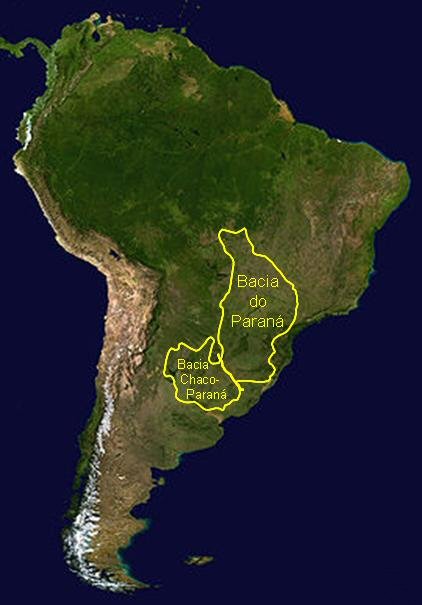
Pseudohemiodon laticeps is found in the Uruguay, Paraná and Paraguay River basins with the type locality being Paraguay. The specimens which come from northern Brazil are said to be Pseudohemiodon platycephalus (Kner, 1853) and the species which have been bred as P. laticeps are probably P. platycephalus instead (Evers, H.-G. & I. Seidel 2005).
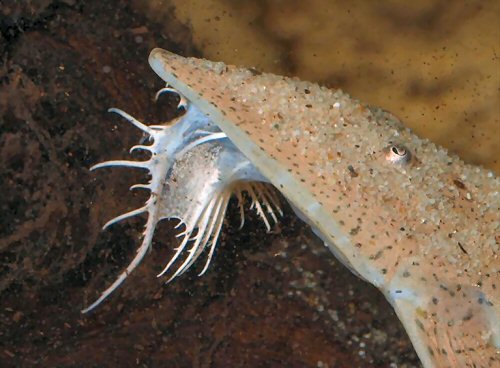
Pseudohemiodon laticeps - Head view with sand particles on head
Pseudohemiodon laticeps has a very unusual mouth with fringed lips as can be seen on the upper image. The male carries the yellow eggs in this structure (abdomino-lip brooders). |
 e
have finely reached the 300 factsheets mark on ScotCat
from over the last 24 years (1997 to 2021), and so
on to the 300th factsheet for June 2021 which takes
us to the popular Loricariidae family and a look at
one of the largest whiptails around, namely the Giant
Whiptail Catfish or Broadhead whiptail, Pseudohemiodon
laticeps. The specific name of laticeps
actually translates to "broad head".
e
have finely reached the 300 factsheets mark on ScotCat
from over the last 24 years (1997 to 2021), and so
on to the 300th factsheet for June 2021 which takes
us to the popular Loricariidae family and a look at
one of the largest whiptails around, namely the Giant
Whiptail Catfish or Broadhead whiptail, Pseudohemiodon
laticeps. The specific name of laticeps
actually translates to "broad head".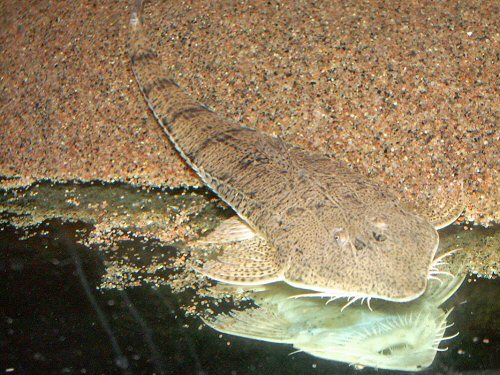
|
Distrbution: The Paraná Basin stretches from the Brazilian state of Mato Grosso in the north to northern Argentina and Uruguay in the south. The southern portion in Uruguay is locally known as Norte Basin. Type locality: Paraguay. |
|
|
Common Name |
Giant Whiptail Catfish, Broadhead whiptail |
Synonyms |
Loricaria laticeps |
Family |
Loricariidae |
Subfamily |
Loricarinae |
Distribution |
South America: Uruguay, Paraná and Paraguay River basins. Type locality: Paraguay. |
Size |
30.0cm. (12ins) |
Temp. |
18-24°c (63-75°f.) |
p.H. |
6.0-7.0. |
Characteristics |
Head large and triangular with a broad head with mouth and lip barbels. The body is strongly depressed and covered with bony plates. Maxillary barbels conspicuous, reaching gill opening. The lips are heavily fringed, but the lower surface of the head is naked. The upper caudal lobe is extended into a long filament. The pelvic fins are used mainly for locomotion on sand. |
Colouration |
The body is light tan in colour with the head and body covered with small, dark spots that form radiating lines on the body. |
Aquarium Care & Compatibility |
| Requires a large aquarium with a big surface area and a sand substrate. If specimens are imported from southeastern Brazil or Paraguay they will prefer cooler temperatures in the aquarium. Provide a good water flow in the aquarium. Provide some shaded areas for this species as they don't like a brightly lit aquarium. Will eat small bottom living fishes and fry but are fine with species that are on the mid to upper layers of the aquarium. |
Reproduction |
The male carries the yellow eggs in this structure (abdomino-lip brooders). After approximately 12-14 days the larvae hatch with a huge yolk sac. It is absorbed over the next two days and the young can be fed Artemia nauplii preferably in a dedicated aquarium. Keep the oxygen levels high as losses can occur if this is not adhered to. |
Sexual Differences |
Mature males will develop their lower lips to allow them to carry their eggs (abdomino-lip brooders). Out with the breeding season the sexual differences are not apparent but males may be smaller than the females. |
Diet |
| Algae wafers, sinking tablet and frozen foods such as bloodworm and shrimp. |
Glossary of Terms |
Caudal:
The tail. |
Etymology |
| Pseudohemiodon:
Pseudos
= fallacy; hemi = half; odon, odontos
= tooth. |
References |
Evers,
H.-G. & I.Seidel: Mergus, Baensch Catfish
Atlas Volume 1, 1st English edn., 2005. Pp.944. |
Photo Credits |
© Benjamin
Stowell |
|

If you would like to contribute to the monthly factsheets with an article, information or photos, please e-mail me. You will of course be credited for your work.
If you would like to donate any denomination of money to the site just click the above link button. All proceeds will go to running the site and hopefully to keep it going for a few years yet.
ScotCat Sources
 Entymology-genera
Entymology-specific name
Online Sources
 Search
 Fishbase
 Wikipedia
 Catalog of Fishes
 GBIF
GBIF
 Fishnet2
 iNaturalist

