SCOTCAT.COM
your internet guide to all things catfish
Pimelodella australis Eigenmann, 1917 |
Image contributors to this species: |
Gabriela Eguren Iriarte (1) Felipe Cantera (2) Allan James (2) Peter Petersen (1) |
ScotCat Sources: |
|
|

Other Sources: |
|


Relevant Information: |
This genus has been in confusion for a good number of years now especially with another close member of the Pimelodidae family, Pimelodus. These notes are the following distinguishing characteristics from the two genus. Pimelodella: Adipose fin long, low with a curved margin. The humeral process is long and spiky. Body usually plain with a dark lateral stripe; rather depressed body. Pimelodus: Adipose fin short, high, with a straight or sloping margin. Humeral process broad, triangular. Body variously patterned, usually quite deep, like Synodontis. Aquarium Care: Treat as you would do with any member of the Pimelodus in that they will be predatory on small fishes in the aquarium and it is also better to keep them in small groups rather than singularly, as this will dilute the aggression. Diet: Will eat any aquarium prepared foods such as tablets, pellets, frozen and live foods. Not fussy eaters. Etymology: The specific name australis: Latin for southern, described as a southern subspecies of P. laticeps. |
Common Name: |
None |
Synonyms: |
Pimelodella laticeps australis, Pimelodella garbei |
Family: |
Heptapteridae |
Distribution: |
South America: Uruguay River basin, and coastal river drainages from Tubarão River in Santa Catarina to coastal lagoons of Rio Grande do Sul, Brazil. Type locality: Uruguayana [State of Rio Grande do Sul, Brazil]. |
Size: |
10.5cm. (4¼ins) |
Temp: |
23-26°C (73-79°F) |
p.H. |
|
6.0-7.0. |
IUCN Red List |
Pimelodella australis occurs in the Uruguay River basin, Patos Lagoon, and coastal rivers of the states of Rio Grande do Sul and Santa Catarina, Brazil. It is a frequent and abundant species. It inhabits slow-moving waters, occurring in lagoons, their channels, and some stretches of slow-flowing rivers. As there is no measurable evidence of threats to the species, it has been categorised as Least Concern (LC), (IUCN 2022). |
Reference: |
Ferraris, C.J. Jr.,
2007. Checklist
of catfishes, recent and fossil (Osteichthyes: Siluriformes),
and catalogue of siluriform primary types. Zootaxa
1418:1-628. |

Family: Heptapteridae Back to Ident-A-Cat Click on Thumbnails |
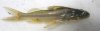 Pimelodella australis
Arroyo del Tala, Departamento de Salto, Uruguay |
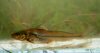 Pimelodella
australis Pimelodella
australis Rio Negro basin, Uruguay |
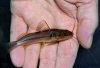 Pimelodella
australis Pimelodella
australis |
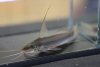 Pimelodella
australis Pimelodella
australis |
 Pimelodella
australis Pimelodella
australis Head view |
 Pimelodella
australis
Pimelodella
australisRio Yi, Durazno Region, Uruguay |
If you would like to contribute to the monthly factsheets with an article, information or photos, please e-mail me. You will of course be credited for your work.

If you would like to donate any denomination of monies to the site just click the above link button. All proceeds will go to running the site and hopefully to keep it going for a few years yet.

