SCOTCAT.COM
your internet guide to all things catfish
Heteropneustes fossilis (Bloch, 1794) |
Image contributors to this species: |
Johnny Jensen's Photographic Library (2) Reinhold Wawrzynski (5) Thomas Kobe (1) Cheilinus Aquarium Photography (2) Andrew Rao (1) |
ScotCat Sources: |
|


Other Sources: |
|


Relevant Information: |
Habitat: Found mainly in ponds, ditches, swamps and marshes, but sometimes occurs in muddy rivers. Can tolerate slightly brackish water. Reproduction: Breeds in confined waters during the monsoon months, but can breed in ponds, derelict ponds and ditches when sufficient rain-water accumulates. Oviparous, distinct pairing possibly like other members of the same family. Aquarium Care: Apart from giving it the utmost respect when handling, it does very well in a larger aquarium, and you can either keep it alone with other inhabitants that are too big for its mouth (large Barbs, Cichlids etc.) or in a group situation if you would like the challenge of breeding them. A sand substrate is best with hiding places of rock and cave work and making sure that it has plenty of swimming space, as they do like to cruise the tank during the night time hours. Keep your regular water changes up with good filtration as they are a greedy species, and can make a mess of your aquarium if good husbandry is not adhered to. Diet: Omnivorous. Etymology: The specific name fossilis: Latin for digging or dug up, allusion not explained; according to Shaw (General Zoology, vol. 5, 1804), it is “sometimes dug out of the mud at the bottom, in the manner of [the cobitid loach] Cobitis fossilis”. Update 2021: The genus Heteropneustes has now been removed from the Clariidae family and reinstated to the Heteropneustidae Hora, 1936 and H. microps has been deemed to be a synonym of H. fossillis. |
Common Name: |
Asian Stinging catfish, Fossil Cat |
Synonyms: |
Silurus fossilis, Saccobranchus fossilis, Silurus singio, Heteropneustes microps |
Family: |
Heteropneustidae |
Distribution: |
Asia: Pakistan and Sri Lanka to Myanmar. Type locality: Tranquebar. |
Size: |
30.0cm. (12ins) |
Temp: |
21-25°C (69-77°F) |
p.H. |
6.0-8.0. |
IUCN Red List |
Heteropneustes fossilis has a very wide range (Pakistan, India, Sri Lanka, Nepal, Bangladesh, Myanmar, Thailand and Laos) and has been introduced elsewhere. Whilst it is heavily utilised for food and for medicine in many parts of its range, and it may be threatened by over-exploitation and habitat loss and degradation (especially from pollution and dams), it is not thought that any global population decline is likely to meet (or be close to meeting) the threshold for Vulnerable. Therefore the species is assessed as Least Concern, (IUCN 2019). |
Reference: |
Burgess, W.E.,
1989. An Atlas of Freshwater and Marine Catfishes:
a preliminary survey of the Siluriformes. T.F.H. Publications,
Neptune City, New Jersey. |

Family: Heteropneustidae Back to Ident-A-Cat Click on Thumbnails |
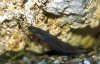 Heteropneustes
fossilis Heteropneustes
fossilis |
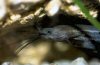 Heteropneustes
fossilis Heteropneustes
fossilis |
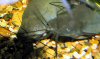 Heteropneustes
fossilis Heteropneustes
fossilis |
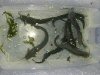 Heteropneustes
fossilis Heteropneustes
fossilisDorsal view |
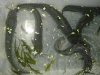 Heteropneustes
fossilis Heteropneustes
fossilisDorsal view |
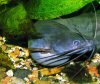 Heteropneustes
fossilis Heteropneustes
fossilisHead view |
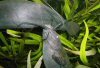 Heteropneustes
fossilis Heteropneustes
fossilis |
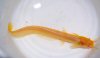 Heteropneustes
fossilis Heteropneustes
fossilisAlbino |
 Heteropneustes
fossilis Heteropneustes
fossilis |
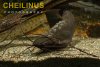 Heteropneustes
fossilis Heteropneustes
fossilisHead view |
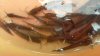 Heteropneustes
fossilis Heteropneustes
fossilisDorsal view |
If you would like to contribute to the monthly factsheets with an article, information or photos, please e-mail me. You will of course be credited for your work.

If you would like to donate any denomination of monies to the site just click the above link button. All proceeds will go to running the site and hopefully to keep it going for a few years yet.

