SCOTCAT.COM
your internet guide to all things catfish
Ictalurus lupus (Girard, 1858) |
Image contributors to this species: |
ScotCat Sources: |
|
|

Other Sources: |
|


Relevant Information: |
Description: Short pectoral fin spines, anal fin rays 22-27, caudal fin less forked than other members of this genera. Habitat: Inhabits sandy and rocky riffles, runs and pools of clear creeks and small rivers and also springs. The species range includes Pecos River system in New Mexico, downstream from Sumner Reservoir; Devils River, southern Texas; and various localities in Coahuila, Durango, Nuevo Leon, and Tamaulipas, Mexico, southward to rios San Fernando and Soto la Marina (Kelsch and Hendricks 1986, Sublette et al. 1990, Miller 2005). Presently the species is widely distributed and moderately common in headwater and upstream sections of the Rio Grande, Pecos River, Rio San Fernando, Rio Soto la Marina, and the isolated Cuatro Cienegas basin (Kelsch and Hendricks 1986). Etymology: The specific name lupus: Latin for wolf, allusion not explained nor evident, perhaps an oblique reference to its similarity to Pimelodus vulpes Girard 1858, a synonym of I. punctatus (vulpes is Latin for fox). Remarks: Greatly resembles a small channel catfish, however, body lacks spots and the caudal fin is not deeply forked, the base of the anal fin is longer than the head length. |
Common Name: |
Headwater catfish |
Synonyms: |
Pimelodus lupus |
Family: |
Ictaluridae |
Distribution: |
North America: USA to Rio Grande drainage including Pecos River system in southeast New Mexico and Devils River in southern Texas; also in northeastern Mexico. Type locality: Headwaters of Rio Pecos, Texas. |
Size: |
40.0cm. (14ins) |
Temp: |
15-23°C (57-73°F) |
p.H. |
|
6.0-7.5. |
IUCN Red List |
Ictalurus lupus total adult population size is currently unknown, however locally or moderately common in some areas of its remaining habitat. It has been known to lose much of its historic distribution in both Texas and especially New Mexico, however it remains within northeastern Mexico headwaters. It's occurrence is deemed to be in decline but at an unknown rate and with threats such as invasive species and habitat lose potentially increasing, more research is required to clarify the population size or potential rate of decline. More information about the species population size, threats and trends to assess it in a category different from Data Deficient. (IUCN 2019). |
Reference: |
McClanes, A.J.
(ed.) 1974 Field guide to freshwater fishes of North
America. Holt, Rinehart and Winston, New York. 212
p. |

Family: Ictaluridae Back to Ident-A-Cat Click on Thumbnails |
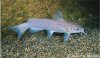 Ictalurus
lupus
Ictalurus
lupus |
If you would like to contribute to the monthly factsheets with an article, information or photos, please e-mail me. You will of course be credited for your work.

If you would like to donate any denomination of monies to the site just click the above link button. All proceeds will go to running the site and hopefully to keep it going for a few years yet.

