SCOTCAT.COM
your internet guide to all things catfish
Noturus furiosus Jordan & Meek 1889 |
Image contributors to this species: |
Scott Smith (2) |
ScotCat Sources: |
|
|

Other Sources: |
|


Relevant Information: |
Description: When compared to other madtoms, the Carolina madtom has a short, chunky body and a distinct colour pattern. Its pectoral spines have well-defined serrated (saw-like) projections along both margins. Habitat: Range includes the Neuse and Tar river drainages, North Carolina, on the Piedmont and inner Coastal Plain, with most records from the vicinity of the Fall Line (Lee et al. 1980, Page and Burr (2011). Colouration: Three dark saddles along its back connect a wide, black stripe along its side extending from its snout to the base of its tail. The adipose fin has a dark blotch that does not quite reach the fin's edge, giving the impression of a fourth saddle. Yellowish to tan blotches space the saddles, while the rest of the fish is tan. The belly is un-speckled, and the tail has crescent-shaped brown bands near its edge and center. Reproduction: Females produce anywhere from 80-300 eggs per season and lay them in cover areas. Males guard the nest until the eggs hatch. Juveniles grow about two inches in their first two years and then mature between age two and three. It is not certain how long these fish live, but they at least reach four years of age. Aquarium Care: The Madtoms are well suited to aquarium life. Provide river gravel and smooth rounded stones for hiding places during the day. A power filter at one end of the tank will provide the conditions of a flowing stream for these catfish. Can be housed with other North American fishes such as minnows, darters and shiners. Diet: The Carolina madtom is a sight feeder most active during the night, with peaks at dawn and dusk. It eats bottom-dwelling invertebrates such as larval midges, mayflies, caddisflies, dragonflies and beetle larvae. In an aquarium setting they like most meaty food, such as cut-up earth worms, frozen blood worm and prawns. They will also take tablet and pellet foods. A varied diet will keep them in optimum health. Etymology: furiosus means stinging spines in its pectoral fins, and this earns this fish the “furiosus” title that is part of its scientific name. |
Common Name: |
Carolina madtom |
Synonyms: |
None |
Family: |
Ictaluridae |
Distribution: |
North America: Neuse and Tar River systems, North Carolina. Type locality: Neuse River at Millburnie, near Raleigh, North Carolina. |
Size: |
12.0cm. (5ins) |
Temp: |
16-23°C (59-73°F) |
p.H. |
|
6.5-7.2. |
IUCN Red List |
In the IUCN Red List of Threatened Species this species is listed as Near Threatened because its extent of occurrence is less than 20,000 sq km, area of occupancy may be less than 2,000 sq km, and distribution, abundance, and habitat quality are declining; on the other hand, the species occurs in more than 10 locations, and the distribution, while becoming fragmented in some areas, is not yet severely fragmented. Rate of decline likely does not exceed 30 percent over 10 years or three generations. Population size is unknown. Hence the species is close to but does not fully qualify for the Vulnerable category (IUCN 2014). |
Reference: |
Froese, R. and D. Pauly.
Editors. 2021. FishBase. World Wide Web electronic
publication. www.fishbase.org, ( 02/2021 ). |

Family: Ictaluridae Back to Ident-A-Cat Click on Thumbnails |
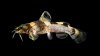 Noturus furiosus
 |
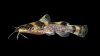 Noturus
furiosus Noturus
furiosus |
If you would like to contribute to the monthly factsheets with an
article, information or photos, please e-mail
me. You will of course be credited for your work.

If you would like to donate any denomination of monies to the site just click the above link button. All proceeds will go to running the site and hopefully to keep it going for a few years yet.

