SCOTCAT.COM
your internet guide to all things catfish
Pylodictis olivaris (Rafinesque, 1818) |
Image contributors to this species: |
Garold W. Sneegas (1) Gordon Mascall (3) Johnny Jensen's Photographic Library (1) Jian Ruilong (1) Tim Aldridge (3) |
ScotCat Sources: |
|
|


Other Sources: |
|


Relevant Information: |
Habitat: Inhabit pools with logs and other debris in low-gradient to moderate-gradient, small to large rivers. Also found in lakes and impoundments. Young occur in rocky and sandy runs and riffles. Reproduction: They first spawn at about 4-5 years old in June and July when water temperatures reach 22-23° C (72-75° F). The flathead, normally a loner fish, pairs up with one of the opposite sex and both the male and female construct the nest. They dig out a large hole under a bank or log or dig down through silt and mud until they reach gravel. They spawn in the nest with the female laying eggs in bunches of 30 to 50. A single female can lay 3,000-30,000 eggs depending on her size. When the female is done, she leaves the nest. The male fans the eggs with his fins. After they hatch, he protects the young until they can feed on their own. This is a good sport and food fish and is commercially important in some areas. Aquarium Care: This is not a catfish for the home aquarium and can only be housed when large in a public aquarium facility. Diet: Juveniles feed on aquatic insect immatures in riffle areas. The adults feed on fishes and crayfish. Etymology: The specific name olivaris: Means "olive-coloured" in Latin. |
Common Name: |
Flathead Catfish |
Synonyms: |
Silurus olivaris, Hopladelus olivaris, Pelodichthys olivaris, Leptops olivaris, Opladelus olivaris |
Family: |
Ictaluridae |
Distribution: |
North America: lower Great Lakes and Mississippi River basins from western Pennsylvania to White-Little Missouri River system in North Dakota, and south to Louisiana in the USA; Gulf Slope from Mobile Bay drainage in Georgia and Alabama, USA to Mexico. Transplanted elsewhere in USA. |
Size: |
155.0cm. (5ft 2ins) |
Temp: |
08-30°C (45-87°F) |
p.H. |
|
6.0-7.5. |
IUCN Red List |
This species is listed as Least Concern in view of the large extent of occurrence, large number of subpopulations, large population size, and lack of major threats. Trend over the past 10 years or three generations is uncertain but likely to be relatively stable, or the species may be declining but not fast enough to qualify for any of the threatened categories under Criterion A (reduction in population size), (needs updating IUCN 2014). |
Reference: |
Aldridge, Tim.
pers comm. 2021. |

Family: Ictaluridae Back to Ident-A-Cat Click on Thumbnails |
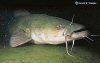 Pylodictis olivaris
Adult |
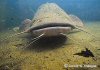 Pylodictis
olivaris Pylodictis
olivarisAdult-head view |
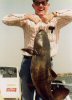 Pylodictis
olivaris Pylodictis
olivarisCaught in lake in Texas 35 lbs |
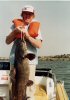 Pylodictis
olivaris Pylodictis
olivarisCaught in lake in Texas 35 lbs |
 Pylodictis
olivaris Pylodictis
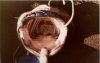
olivarisGape of mouth |
 Pylodictis
olivaris Pylodictis
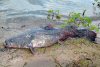
olivarisAdult |
 Pylodictis
olivaris Pylodictis
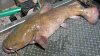
olivarisAdult |
 Pylodictis
olivaris Pylodictis
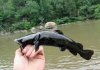
olivarisJuvenile |
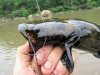 Pylodictis
olivaris Pylodictis
olivarisJuvenile head view |
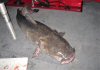 Pylodictis
olivaris Pylodictis
olivarisAdult |
If you would like to contribute to the monthly factsheets with an article, information or photos, please e-mail me. You will of course be credited for your work.

If you would like to donate any denomination of monies to the site just click the above link button. All proceeds will go to running the site and hopefully to keep it going for a few years yet.

