SCOTCAT.COM
your internet guide to all things catfish
Ancistrus clementinae Rendahl 1937 |
Image contributors to this species: |
Nathan Lujan (3) Jorge Garcia (3) |
ScotCat Sources: |
|

Other Sources: |
|
|


Relevant Information: |
Habitat: This species is very common in the Guayas and Esmeraldas River drainages. Aquarium Care: The Ancistrus genera make good community fish where they do not grow too big for the aquarium. Some species have different requirements in the aquarium so best to read up on the species you have whereas if they need higher oxygen requirements or not, or if they prefer cooler waters if they originate from the southern parts of South America against the species from further up north. Diet: Vegetable foods such as cucumber and courgette and also tablet and meaty foods. Reproduction: The female lays her eggs in caves or crevices... that the male has chosen and cleaned.... as a cluster. The male usually then guards the eggs after ejecting the female. The fry then cling to the sides of the cave and when they use up their yolk sac, which is around the four to seven day period, they will be ready to feed on infusuria, vegetable matter, brine shrimp naupli or micro worms. In a community tank a few will survive if enough hiding places are afforded to them (prefers cooler waters). Etymology: The specific name clementinae: Of the Río Clementina system, northwest of Babahoyo, Ecuador, the type locality. Remarks: According to molecular studies by Lujan et al (2015), A. clementinae is said to be the most primitive Ancistrus species known and is the sister species to all other Ancistrus (I. Seidel & A. Tanke 2025). |
Common Name: |
None |
Synonyms: |
None |
Family: |
Loricariidae |
Distribution: |
South America: Pozuelos River basin in the Guayas River drainage in Ecuador. Type locality: Ecuador, Syst. Rio de Clementina [=Río Pozuelos], nw. von Babahoyo. |
Size: |
11.0-12cm. (4-5ins) |
Temp: |
24-28°c (75-82°f.) |
p.H. |
|
6.0-7.5. |
IUCN Red List |
Ancistrus clementinae is distributed on the Pacific slope of Ecuador, where it has been reported from the Guayas, Santa Rosa, and Catamayo River drainages. Extent of Occurrence (EOO) is estimated to be 15,493-32,211 km2 but will probably increase as more records are documented from the Santa Rosa and Catamayo River drainages. Deforestation, agricultural production, pollution, and mining activities are the primary threats to freshwater habitat on the Pacific slope of Ecuador, and continuing decline in habitat quality is inferred. However, There is currently no indication of major, range-wide population decline and this species is relatively well-represented in ichthyological collections. Therefore, A. clementinae is assessed as Least Concern (IUCN 2021). |
Reference: |
Ferraris, C.J. Jr.,
2007. Checklist of catfishes, recent and fossil (Osteichthyes:
Siluriformes), and catalogue of siluriform primary
types. Zootaxa 1418:1-628. |

Family: Loricariidae Back to Ident-A-Cat Click on Thumbnails |
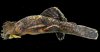 Ancistrus
clementinae Ancistrus
clementinae |
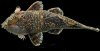 Ancistrus
clementinae Ancistrus
clementinaeDorsal view |
 Ancistrus
clementinae Ancistrus
clementinaeVentral view |
 Ancistrus
clementinae Ancistrus
clementinae |
 Ancistrus
clementinae Ancistrus
clementinae |
 Ancistrus
clementinae Ancistrus
clementinaeHead view |
If you would like to contribute to the monthly factsheets with an article, information or photos, please e-mail me. You will of course be credited for your work.

If you would like to donate any denomination of monies to the site just click the above link button. All proceeds will go to running the site and hopefully to keep it going for a few years yet.

