SCOTCAT.COM
your internet guide to all things catfish
Ancistrus sp. 'tortoiseshell' |
Image contributors to this species: |
ScotCat Sources: |
|

Other Sources: |
|

Relevant Information: |
This small Ancistrus species was first seen in the Eastern part of Germany. It is thought to be a mutation as they are fertile and show many different colour patterns from an orange body colour with a few black spots to a brown/black body with orange spots. These are now being bred in Germany. Aquarium Care: This is a smallish Ancistrus species in the home aquarium were it will grow to about the 10cm. length but larger in its natural habitat. Diet: Mainly vegetarian with a liking for algae but as this will be in short supply in a tank set-up can be fed on soft veg such as cucumber, courgette (zucchini), raw potato plus loricaria tablets. Will also eat worm food but its main diet would have to be vegetarian. Reproduction: The female lays her eggs in caves or crevices... that the male has chosen and cleaned.... as a cluster. The male usually then guards the eggs after ejecting the female. The fry then cling to the sides of the cave and when they use up their yolk sac, which is around the four to seven day period, they will be ready to feed on infusuria, vegetable matter, brine shrimp naupli or micro worms. In a community tank a few will survive if enough hiding places are afforded to them. |
Common Name: |
Tortoiseshell Ancistrus |
Synonyms: |
None |
Family: |
Loricariidae |
Distribution: |
Captive bred |
Size: |
6cm. (2½ins) |
Temp: |
23-27°c (73-81°f.) |
p.H. |
|
6.0-7.2. |
Reference: |
|
AquaLog News no. 6. |

Family: Loricariidae Back to Ident-A-Cat Click on Thumbnails |
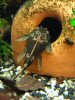 Ancistrus
sp.'tortoiseshell' Ancistrus
sp.'tortoiseshell' |
If you would like to contribute to the monthly factsheets with an article, information or photos, please e-mail me. You will of course be credited for your work.

If you would like to donate any denomination of monies to the site just click the above link button. All proceeds will go to running the site and hopefully to keep it going for a few years yet.

