SCOTCAT.COM
your internet guide to all things catfish
Baryancistrus hadrostomus de Oliveira, Rapp Py-Daniel & Oyakawa 2019 |
Image contributors to this species: |
Mark Henry Sabaj (1) |
ScotCat Sources: |
|

Other Sources: |
|


Relevant Information: |
This species is diagnosed in part by having fewer white dots more widely spaced. (Sabaj, M.H. 2021). Description: They are large and high backed. They have a large sucker mouth with a high number of slender and long stemmed teeth. A small membrane lies behind the last ray of the dorsal fin which joins the anal fin. Found in shallow fast flowing areas of water with a stony substrate. Aquarium Care: Can be problematic, especially with inexperienced aquarists, not a beginners fish. As of most of this genera the adults can be extremely territorial, especially with their own kind and other species of Baryancistrus. Prefers higher temperatures. Adults can prove to be extremely territorial. Sexual Differences: Mature males have a broader and longer head and longer pectoral fin spines. Diet: Vegetarian diet, and will also eat plants in the aquarium. Etymology: The specific name hadrostomus: Large-mouthed, from hadrós, well-developed or large, and stóma, mouth, referring to its “extremely large” oral disc. |
Common Name: |
L219, L324 |
Synonyms: |
None |
Family: |
Loricariidae |
Distribution: |
South America: Brazil, Pará, Rio Jari. Type Locality: First waterfall of the Iratapuru River, Laranjal do Jari, Amapá, Brazil, 0°33'50.4"S, 52°34'42.4"W. |
Size: |
30.0cm. (12ins) |
Temp: |
26-30°c (79-87°f.) |
p.H. |
|
6.0-7.2. |
IUCN Red List |
Not evaluated |
Reference: |
Seidel, I.
2008. Back to Nature guide to L-catfishes, Ettlingen,
Germany 208 p. |

Family: Loricariidae Back to Ident-A-Cat Click on Thumbnails |
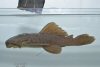 Baryancistrus
hadrostomus Baryancistrus
hadrostomus |
If you would like to contribute to the monthly factsheets with an article, information or photos, please e-mail me. You will of course be credited for your work.

If you would like to donate any denomination of monies to the site just click the above link button. All proceeds will go to running the site and hopefully to keep it going for a few years yet.

