SCOTCAT.COM
your internet guide to all things catfish
Dolichancistrus fuesslii (Steindachner, 1911) |
Image contributors to this species: |
Allan James (4) Johnny Jensen's Photographic Library (1) Haakon Haagensen (2) |
ScotCat Sources: |
|

Other Sources: |
|


Relevant Information: |
Description: The members of the Dolichancistrus genus are very similar to Chaetostoma but with a completely ossified edge to the snout. They also have stouter bristles behind the gill cover and longer pectoral fins and a growth of fine odontodes around the edges of the mouth. To differentiate this genus, Dolichancistrus have hypertrophied (elongate) odontodes on the side of the snout, small eyes and have 8 or more dorsal fin rays against 7 in the other ancistrins. Also, Dolichancistrus will develop a single hypertrophied odontodes in the evertible cheek mass (rarely 2 or 3) vs. many, and males will develop really long pectoral-fin spines. Aquarium Care: Conditions the same as Chaetostoma where they will need a good water flow in the aquarium with a sand substrate and plenty of hiding places. Diet: Great algae eater, but you will have to subsidise this food with algae wafers and vegetable foods such as cucumber, zucchini and lettuce. Will also except tablet and worm foods. Etymology: The specific name fuesslii: Patronym not identified, probably in honour of Anton Heinrich Hermann Fassl (1876–1922), German commercial butterfly and beetle collector, who may have collected holotype (he collected butterflies in the same region of Colombia in 1911); Steindachner’s spelling, füsslii, is apparently a printer’s error since he correctly spelled the name in 1915 (the characid Astyanax fasslii and the catfish Trichomycterus fassli [the latter with a single i], but since there is no internal evidence that the name honoured Fassl, the original spelling is retained). |
Common Name: |
Bulldog Pleco, L225, L442 |
Synonyms: |
Ancistrus fuesslii, Lasiancistrus fuesslii |
Family: |
Loricariidae |
Distribution: |
South America: Western Colombia; known only from the holotype. Type locality: Sosomoco, Ostkolumbien, in 800 m Höhe. |
Size: |
12.0cm (6ins) |
Temp: |
21-24°c (68-75°f.) |
p.H. |
|
6.5-7.2. |
IUCN Red List |
The distribution of Dolichancistrus fuesslii is restricted upper reaches of Guaviare, Meta and Arauca drainages. The area of occupancy (AOO) is best estimated at 2,224 km2, close to the Vulnerable B2 threshold. Given the regional impacts of deforestation, agribusiness, effluents, and riverbed transformation, it occurs in 4-6 threat-based locations, meeting the Vulnerable subcriterion a threshold. There is continuing decline in habitat meeting subcriterion b(iii). Therefore, this species is assessed as Near Threatened (IUCN 2021). |
Reference: |
Ferraris, C.J. Jr.,
2007. Checklist of catfishes, recent and fossil (Osteichthyes:
Siluriformes), and catalogue of siluriform primary
types. Zootaxa 1418:1-628. |

Family: Loricariidae Back to Ident-A-Cat Click on Thumbnails |
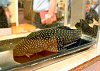 Dolichancistrus
fuesslii Dolichancistrus
fuesslii |
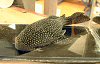 Dolichancistrus
fuesslii Dolichancistrus
fuesslii |
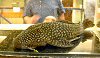 Dolichancistrus
fuesslii Dolichancistrus
fuesslii |
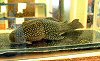 Dolichancistrus
fuesslii Dolichancistrus
fuesslii |
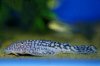 Dolichancistrus
fuesslii Dolichancistrus
fuesslii |
 Dolichancistrus
fuesslii Dolichancistrus
fuesslii |
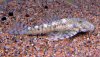 Dolichancistrus
fuesslii Dolichancistrus
fuesslii |
If you would like to contribute to the monthly factsheets with an article, information or photos, please e-mail me. You will of course be credited for your work.

If you would like to donate any denomination of monies to the site just click the above link button. All proceeds will go to running the site and hopefully to keep it going for a few years yet.

