SCOTCAT.COM
your internet guide to all things catfish
Hemiodontichthys acipenserinus (Kner, 1853) |
Image contributors to this species: |
Robin Warne (1) Peru Aquarium Group (1) Johnny Jensen's Photographic Library (3) |
ScotCat Sources: |
|

Other Sources: |
|


Relevant Information: |
Habitat: Lives on sandy bottom where it feeds on worms and micro-crustaceans. Mature males develop a huge labial veil and teeth with spoon-shaped crow (versus pointed ones in females and juveniles). Unlike most Loricariidae, they don't have well developed odontodes on the snout and pectoral fins. Aquarium Care: It is stated that this species grows smaller in the confines of an aquarium. Provide a sand substrate. Best to have this species as the only bottom dweller as they will find it difficult to compete for food with other fish Keep the aquarium clean as they are prone to bacterial infections if the tank is not well looked after. Reproduction: During reproduction, the males bear a cluster of eggs fixed to their lips, which they provide with ventilation during movement. About one week after hatching, the alevins leave their parent's protection. Etymology: The specific name acipenserinus: –inus (L.), adjectival suffix: Acipenser, sturgeon genus, i.e., sturgeon-like, referring to its superficial resemblance to sturgeons, particularly its long and narrow snout. |
Common Name: |
Knob nosed Whiptail Catfish |
Synonyms: |
Hemiodon acipenserinus |
Family: |
Loricariidae |
Distribution: |
South America: Amazon, Essequibo, Oyapock, and Paraguay River basins . Type locality: Rio Guaporé, Matogrosso (Juquia), Brazil. |
Size: |
13.5cm. (5¼ins) |
Temp: |
24-28°c (75-83°f.) |
p.H. |
|
6.0-7.0. |
IUCN Red List |
Despite the little information available on this species, it has a wide range and no apparent threats. Therefore, it is assessed as Least Concern (LC), (IUCN 2023). |
Reference: |
Evers, H.-G. &
I.Seidel: Mergus, Baensch Catfish Atlas Volume
1, 1st English edn., 2005. Pp.944. |

Family: Loricariidae Back to Ident-A-Cat Click on Thumbnails |
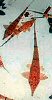 Hemiodontichthys
acipenserinus Hemiodontichthys
acipenserinus |
 Hemiodontichthys
acipenserinus Hemiodontichthys
acipenserinus |
 Hemiodontichthys
acipenserinus Hemiodontichthys
acipenserinusHead view |
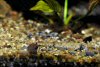 Hemiodontichthys
acipenserinus Hemiodontichthys
acipenserinus |
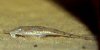 Hemiodontichthys
acipenserinus Hemiodontichthys
acipenserinus |
If you would like to contribute to the monthly factsheets with an article, information or photos, please e-mail me. You will of course be credited for your work.

If you would like to donate any denomination of monies to the site just click the above link button. All proceeds will go to running the site and hopefully to keep it going for a few years yet.

