SCOTCAT.COM
your internet guide to all things catfish
Isorineloricaria spinosissima (Steindachner 1880) |
Image contributors to this species: |
|
Windsor Aquirre (1) Daniel (2) Jorge Garcia (2) |
ScotCat Sources: |
|

Other Sources: |
|


Relevant Information: |
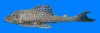
Isorineloricaria spinosissima is known in Ecuador as the "raspabalsa". It is a large, ecologically important herbivorous fish that feeds on algae and plants on rocks, trunks, and other submerged structures including small boats (Barnhil et al., 1974; Laaz et al., 2009). Habitat: This species is very common in the Guayas River drainage. Description: Isorineloricaria spinosissima differs from other species by the following characters: long and slender caudal peduncle, which is almost round in traverse section, peculiar and very prominent secondary sexual dimorphism, with females being more rugose than the average Hypostomus due to the odontodes becoming excessively long (Isbrucker, 1980). Aquarium Care: Non territorial and peaceful but they are messy eaters and as such good water quality would need to be adhered to. A large tank over 5ft (150cm) would be needed due to the eventual adult size of this catfish. Diet: Omnivore in the aquarium but prefers vegetable foods. Etymology: The specific name spinosissima: Meaning the most spiny. |
Common Name: |
Zucchini catfish |
Synonyms: |
Plecostomus spinosissimus, Plecostomus festae |
Family: |
Loricariidae |
Distribution: |
South America: Pacific versant rivers of Ecuador. Type locality: Guayaquil [Ecuador]. |
Size: |
50.0cm. (20ins) |
Temp: |
25-29°c (77-85°f.) |
p.H. |
|
6.0-7.5. |
IUCN Red List |
Isorineloricaria spinosissima occurs in lowland and midland tributary streams in the Guayas River drainage. Extent of Occurrence (EOO) is estimated to be 4,540-32,000 km2 based on limited ichthyological sampling in the region, but likely exceeds 20,000 km2. Total population size and population trend are unknown. The primary threats to freshwater fauna in the Guayas River drainage include land-use changes associated with agricultural production and associated pollutants, runoff from residential and urban centers, and mining activities and associated wastewater discharge. While the direct impact and scope of existing threats have not been evaluated in detail, continuing declines in habitat quality at local and regional scales are inferred. Given these uncertainties, the number of threat-based locations where I. spinosissima occurs cannot be estimated with accuracy but likely exceed the threshold for a threatened category. Considering a range that likely extends throughout much of the Guayas River drainage, lacking evidence of direct impact from major threats in the region, and an ability to persist in degraded habitat, I. spinosissima is assessed as Least Concern (IUCN 2021). |
Reference: |
|
Ferraris, C.J. Jr.,
2007. Checklist of catfishes, recent and fossil (Osteichthyes:
Siluriformes), and catalogue of siluriform primary
types. Zootaxa 1418:1-628. |

Family: Loricariidae Back to Ident-A-Cat Click on Thumbnails |
|
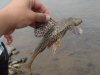 Isorineloricaria
spinosissima Isorineloricaria
spinosissima |
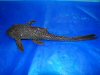 Isorineloricaria
spinosissima Isorineloricaria
spinosissimaDorsal view |
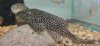 Isorineloricaria
spinosissima Isorineloricaria
spinosissima |
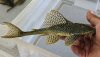 Isorineloricaria
spinosissima Isorineloricaria
spinosissima |
If you would like to contribute to the monthly factsheets with an article, information or photos, please e-mail me. You will of course be credited for your work.

If you would like to donate any denomination of monies to the site just click the above link button. All proceeds will go to running the site and hopefully to keep it going for a few years yet.

