SCOTCAT.COM
your internet guide to all things catfish
Kronichthys lacerta (Nichols, 1919) |
Image contributors to this species: |
ScotCat Sources: |
|

Other Sources: |
|


Relevant Information: |
There are three species in this genera, K. subteres Miranda-Ribeiro, 1908, K. heylandi (Boulenger, 1900), and K. lacerta (Nichols, 1919). Habitat: Inhabits coastal streams with rocky and sandy bottom. Diet: Kronichthys lacerta feeds on algae and sediments (Wolff et al. 2013, Bonato 2011). Etymology: The specific name lacerta: Latin for lizard, allusion not explained, perhaps referring to the lizard-like appearance. Remarks: Redescribed in Armbruster & Page (1997: 228). |
Common Name: |
None |
Synonyms: |
Plecostomus lacerta |
Family: |
Loricariidae |
Distribution: |
South America: Baia de Paranaguá and Ribeira de Iguapé River basin to Santa Catarina State (southern Brazil). Type locality: Poço Grande (Estado de São Paulo) Rio Juquia, Brazil. |
Size: |
7.0cm. (2¾ins) |
Temp: |
20-24°c (67-75°f) |
p.H. |
|
6.0-7.5. |
IUCN Red List |
Kronichthys lacerta has a wide distribution in the drainages of Paranaguá Bay and the Ribeira de Iguape River basin, in the states of Paraná and São Paulo. It is a frequent and abundant species that inhabits streams with rocky substrate and strong currents. No threats that could endanger its populations have been identified. Therefore, Kronichthys lacerta was categorised as Least Concern (LC), (IUCN 2022). |
Reference: |
A. Frota, H.J. Message,
R.C. de Oliveira, E. Benedito & W.J. da Graça.
Ichthyofauna of headwater streams from the rio Ribeira
de Iguape basin, at the boundaries of the Ponta Grossa
Arch, Paraná, Brazil. |

Family: Loricariidae Back to Ident-A-Cat Click on Thumbnails |
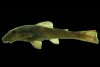 Kronichthys lacerta
 |
If you would like to contribute to the monthly factsheets with an article, information or photos, please e-mail me. You will of course be credited for your work.

If you would like to donate any denomination of monies to the site just click the above link button. All proceeds will go to running the site and hopefully to keep it going for a few years yet.

