SCOTCAT.COM
your internet guide to all things catfish
Leporacanthicus heterodon Isbrücker & Nijssen, 1989 |
Image contributors to this species: |
Danny Blundell (1) Allan James (2) Johnny Jensen's Photographic Library (4) Haakon Haagensen (1) Jacqueline Heijmen Bennett-Leaver (2) |
ScotCat Sources: |
|


Other Sources: |
|


Relevant Information: |
This is the smallest species in this genera. Description: The genus Leporacanthicus is characterised by the possession of having a small suckermouth with lip barbels on the top and pointed teeth. Leporacanthicus is readily identifiable from all other Ancistrini by the development of only two teeth in each premaxilla, the inner teeth being very long (all other Ancistrini have more than two teeth in the premaxilla), by having a well-raised supraoccipital crest (the supraoccipital in most Ancistrini is flat to slightly raised) and by having numerous long barbels above the upper jaws. It has been hypothesized that the enlarged teeth of the upper jaw are used to remove snails from their shells (Burgess 1994). The males have a more elongated body and a broader head and they also posses short odontodes on the edges of the snout which the females lack. Aquarium Care: This fish can be territorial with its own kind and so must have a big enough aquarium if more than one is kept. Regular water changes must be adhered to, and also having a powerful filter system that can deliver a high oxygen content. Hiding places are beneficial to this fish with bogwood or wood of some description and/or some rockwork. Reproduction: Has been bred in captivity due to its smaller adult size. Diet: Not a true vegetarian so a wide variety of foods including algae, algae wafers, cucumber or courgette ( zucchini), prawns, shrimps and tablet food. Etymology: The specific name heterodon: héteros, different; odon, from odoús, tooth, referring to its unique hare- or rabbit-like teeth. |
Common Name: |
Golden Heterodon, L172a, L172b |
Synonyms: |
None |
Family: |
Loricariidae |
Distribution: |
Brazil: In the Xingu River basin. Type locality: Brasilien, Est. Mato Grosso, Rio Xingú, Cachoeira von Martius, oberer Xingú. |
Size: |
18.0cm. (7ins) |
Temp: |
25-30°c (77-87°f.) |
p.H. |
|
6.0-7.2. |
IUCN Red List |
Leporacanthichus heterodon is endemic to Brazil and is distributed along the Xingu River, mainly in the Volta Grande region, with the type locality established at the Von Martius Waterfall in the upper Xingu River (Mato Grosso state), with no known occurrence in the Iriri River. It is a frequent but not very abundant species associated with rocky and rapid environments. Specimens are collected for the aquarium market, but this apparently does not represent a significant impact on L. heterodon subpopulations. The construction of the Belo Monte hydroelectric plant and other dams represents a strong local impact and is the main threat to the species, causing habitat loss and a reduction in its area of occupancy. It is suspected that this would lead to a population reduction of slightly less than 30% in 18 years (three generational periods), categorising Leporacanthichus heterodon as Near Threatened (NT), approaching the Vulnerable (VU) category under criterion A3c. (IUCN 2022). |
Reference: |
|
Chico Mendes Institute
for Biodiversity Conservation (ICMBio).
2022. Leporacanthicus heterodon. The IUCN
Red List of Threatened Species 2022. |

Family: Loricariidae Back to Ident-A-Cat Click on Thumbnails |
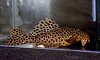 Leporacanthicus
heterodon Leporacanthicus
heterodon |
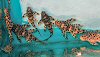 Leporacanthicus
heterodon Leporacanthicus
heterodon |
 Leporacanthicus
heterodon Leporacanthicus
heterodon |
 Leporacanthicus
heterodon Leporacanthicus
heterodon |
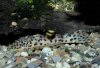 Leporacanthicus
heterodon Leporacanthicus
heterodon |
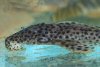 Leporacanthicus
heterodon Leporacanthicus
heterodonHead view |
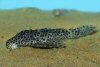 Leporacanthicus
heterodon Leporacanthicus
heterodon |
 Leporacanthicus
heterodon Leporacanthicus
heterodon |
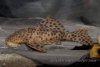 Leporacanthicus
heterodon Leporacanthicus
heterodon |
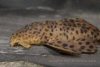 Leporacanthicus
heterodon Leporacanthicus
heterodonHead view |
If you would like to contribute to the monthly factsheets with an article, information or photos, please e-mail me. You will of course be credited for your work.

If you would like to donate any denomination of monies to the site just click the above link button. All proceeds will go to running the site and hopefully to keep it going for a few years yet.

