SCOTCAT.COM
your internet guide to all things catfish
Loricariichthys brunneus (Hancock, 1828) |
Image contributors to this species: |
Kiruya Momochi (2) |
ScotCat Sources: |
|

Other Sources: |
|


Relevant Information: |
Habitat: This species is widely distributed in the entire Orinoco basin. It occurs in the Río Bita and EFI Ramsar sites (Villa-Navarro et al. 2017, 2020), PNN Macarena (DoNascimiento et al. 2018) and PNN El Tuparro (Mesa et al. 2019). It is an invasive species in the Magdalena-Cauca River. Records for Guyana, Peru and Suriname require confirmation. Reproduction: In sexually active males the lips are transformed into large dermal lobes which are used to hold the eggs after spawning. This species is unique in that the males hold on to the eggs for 11 days. Aquarium Care: Keep on a sandy substrate with branchwork. Reasonably easy to keep wirh regular good husbandry. Reproduction: The species reproduces throughout the year, although with greater intensity in the rainy season. It spawns multiple times and has complex parental care. The male develops the upper lip and forms a "labial bag" to carry the egg mass (Machado-Allison and López-Rojas 1975, Galvis et al. 2006). Diet: In its natural habitat the diet is algae and insects. In the aquarium, dry foods, algae wafers, Spirulina and normal tablet foods. Frozen foods, Artemia nauplii, glass worms and Daphnia. Etymology: The specific name brunneus: Medieval Latin for brown, referring to its brownish body colour. |
Common Name: |
None |
Synonyms: |
Loricaria brunnea |
Family: |
Loricariidae |
Distribution: |
South America: Orinoco River basin. Type Locality: Venezuela, the branches and lakes of the Orinoco. |
Size: |
30.0cm. (12ins) |
Temp: |
25-29°c (75-85°f.) |
p.H. |
|
6.0-7.0. |
IUCN Red List |
Loricariichthys brunneus is evaluated as Least Concern because it has a wide distribution, occurs in several protected areas and has a stable population (IUCN 2022). |
Reference: |
|
Ferraris, C.J. Jr.,
2007. Checklist of catfishes, recent and fossil (Osteichthyes:
Siluriformes), and catalogue of siluriform primary
types. Zootaxa 1418:1-628. |

Family: Loricariidae Back to Ident-A-Cat Click on Thumbnails |
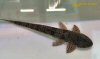 Loricariichthys
brunneus Loricariichthys
brunneus |
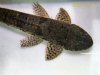 Loricariichthys
brunneus Loricariichthys
brunneusHead view |
If you would like to contribute to the monthly factsheets with an article, information or photos, please e-mail me. You will of course be credited for your work.

If you would like to donate any denomination of monies to the site just click the above link button. All proceeds will go to running the site and hopefully to keep it going for a few years yet.

