SCOTCAT.COM
your internet guide to all things catfish
Neoplecostomus sapucai Andrade, Uzeda, Paiola, Siqueira-Cesar, Okubo, Marques-Frisoni & Langeani, 2024 |
Image contributors to this species: |
ScotCat Sources: |
|

Other Sources: |
|
|


Relevant Information: |
Description: Neoplecostomus sapucai differs from all congeners, except N. altimontanus and N. bandeirante, by having the exposed area of first plates of mid-ventral and ventral series narrower than the naked areas surrounding each plate (vs. all other congeners with exposed area of first plates of mid-ventral and ventral series equal to or wider than the naked area surrounding each plate). Furthermore, the new species differs from all congeners, except N. altimontanus, N. jaguari, and N.langeanii by presenting sexual dimorphism in dentition, with males having more robust and fewer teeth compared to females (vs. tooth morphology and number similar in both sexes in all other congeners). Additionally, N. sapucai differs from N. bandeirante by the presence of a lateronasal plate, absence of keels along the lateral series of plates and absence of preadipose azygous plates (vs. lateronasal plate absent, keels and preadipose azygous plates present); from N. jaguari by having two posteronasal plates (vs. five to seven posteronasal plates) and females with 24–33, modally 26 premaxillary and 22–31, modally 26 dentary teeth (vs. females with 30–39 premaxillary and 30–38 dentary teeth); and from N. langeanii by the presence of an extra canal-bearing plate located between supraopercle and dorsal opening of the preopercular canal (vs. extra canal-bearing plate absent), (Andrade et al. 2024). Habitat: Neoplecostomus sapucai is known from eight streams in the upper portion of rio Sapucaí drainage, Rio Grande sub-basin, at the Northern slope of Serra da Mantiqueira, within the states of Minas Gerais and São Paulo. Sexual Dimorphism. Males present a urogenital papilla posterior to anal opening and a skin flap along the dorsal surface of unbranched pelvic-fin ray (both absent in females). Additionally, males have teeth short, robust and in fewer number (11–20 premaxillary and 13–20 dentary teeth) compared to females, which have slender and more numerous teeth (24–33 premaxillary and 22–31 dentary teeth). Etymology: The specific epithet “sapucai” is in reference to rio Sapucaí, the drainage where the species is known to occur. A noun in apposition. |
Common Name: |
None |
Synonyms: |
None |
Family: |
Loricariidae |
Distribution: |
South America: Brazil, eight streams in the upper portion of Rio Sapucaí drainage, Rio Grande sub-basin, at the Northern slope of Serra da Mantiqueira, within the states of Minas Gerais and São Paulo. |
Size: |
9.0cm. (3¾ins) |
Temp: |
20-25°c (67-77°f.) |
p.H. |
|
6.0-7.2. |
IUCN Red List |
Not Evaluated. |
Reference: |
|
Fish
in the News
2024. |

Family: Loricariidae Back to Ident-A-Cat Click on Thumbnails |
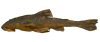 Neoplecostomus sapucai
Holotype-Lateral view-Delfim Moreira, unnamed stream on highway AMG-1915, Rio Sapucaí drainage, Rio Grande sub-basin, upper Rio Paraná basin |
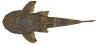 Neoplecostomus
sapucai Neoplecostomus
sapucaiHolotype-Dorsal view-Delfim Moreira, unnamed stream on highway AMG-1915, Rio Sapucaí drainage, Rio Grande sub-basin, upper Rio Paraná basin |
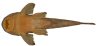 Neoplecostomus
sapucai Neoplecostomus
sapucaiHolotype-Ventral view-Delfim Moreira, unnamed stream on highway AMG-1915, Rio Sapucaí drainage, Rio Grande sub-basin, upper Rio Paraná basin |
 Neoplecostomus
sapucai Neoplecostomus
sapucaiLive specimen |
If you would like to contribute to the monthly factsheets with an article, information or photos, please e-mail me. You will of course be credited for your work.

If you would like to donate any denomination of monies to the site just click the above link button. All proceeds will go to running the site and hopefully to keep it going for a few years yet.

