SCOTCAT.COM  

your internet guide to all things catfish
≡
  • HOME
  • FACTSHEETS
    • By Month/Year
    • By Family
    • by Genus
    • by Common Names
    • By Specific Names
    • By Continent
      • Index
      • Africa
      • Asia
      • Australasia
      • Europe
      • North America
      • South America
  • GALLERIES
    • Photo Gallery
    • Art Gallery
    • Movie Gallery
    • Stamps Gallery
  • FAMILIES
    • A-B
      • Ailiidae
      • Akysidae
      • Amblycipitidae
      • Amphiliidae
      • Anchariidae
      • † Andinichthyidae
      • Ariidae
      • Aspredinidae
      • Astroblepidae
      • Auchenipteridae
      • Auchenoglanididae
      • Austroglanididae
      • Bagridae
    • C-D
      • Callichthyidae
      • Cetopsidae
      • Chacidae
      • Clariidae
      • Claroteidae
      • Cranoglanididae
      • Diplomystidae
      • Doradidae
    • H-I
      • Heptapteridae
      • Heteropneustidae
      • Horabagridae
      • Ictaluridae
    • K-L-M
      • Kryptoglanidae
      • Lacantuniidae
      • Loricariidae
      • Malapteruridae
      • Mochokidae
    • N-P
      • Nematogenyidae
      • Pangasiidae
      • Phreatobiidae
      • Pimelodidae
      • Plotosidae
      • Pseudopimelodidae
    • R-S-T
      • Ritidae
      • Schilbeidae
      • Scoloplacidae
      • Siluridae
      • Sisoridae
      • Trichomycteridae
  • ARTICLES
    • Index
    • Breeding
    • By Author
    • Cat-Articles
    • General
    • Numbered List
    • Ichthyology
    • Travel/Collecting
  • IDENT-A-CAT
  • RESOURCES
    • Citation
    • Etymology
    • Fishhouse
    • Glossary
    • Scientific Papers
    • ScotShop
  • SITE MAP
  • FB GROUP
  • HELP
    • Index
    • Catfish Anatomy
    • Convertors
    • FAQ
    • Ident-A-Cat
    • Water Chemistry

Paraloricaria commersonoides (Devincenzi, 1943)


Image contributors to this species:

Zierfisch Zentrum Austria (2) Jorge Garcia (2)

ScotCat Sources:

Etymology = Genus  Etymology =Specific name

Other Sources:

Search  Fishbase  Wikipedia  Catalog of Fishes  Global Biodiversity Information Facility  iNaturalist  IUCN

Relevant Information:

Redescribed in Ringuelet et al. (1967). Aquarium Care: Grows rather large and would need a large tank to accommodate it and a good water flow in the aquarium. Diet: In their natural habitat part of their diet is molluscs. Etymology: The specific name commersonoides: –oides, Neo-Latin from ei´dos, form or shape: Hypostomus commersoni, similar in shape and colouration. Remarks: Not exported very often due to their large size.

Common Name:

None

Synonyms:

Loricaria commersonoides

Family:

Loricariidae

Distribution:

South America: Uruguay River basin (Argentina, Brazil and Uruguay). Type Locality: Río Uruguay, frente a la ciudad de Paysandú [Uruguay].

Size:

37.0cm. (14¾ins)

Temp:

20-27°c (67-81°f.)

p.H.

6.0-7.5.

IUCN Red List

Paraloricaria commersonoides was described from the lower Uruguay River in Uruguay, where it is known only from the holotype, which is considered possibly lost. The species occurs in Brazil in the upper and middle Uruguay River basin, known only from two localities, one in Santa Catarina and the other in Rio Grande do Sul, in the São Nicolau region. Due to a lack of sufficient information to assess the species' true distribution, as well as taxonomic limitations that hinder its identification, Paraloricaria commersonoides is categorised as Data Deficient (DD), (IUCN 2021).

Reference:

Chico Mendes Institute for Biodiversity Conservation (ICMBio). 2021. Paraloricaria commersonoides. The IUCN Red List of Threatened Species 2021.
Ferraris, C.J. Jr
., 2007. Checklist of catfishes, recent and fossil (Osteichthyes: Siluriformes), and catalogue of siluriform primary types. Zootaxa 1418:1-628.
Ferraris, C.J. Jr., 2003. Loricariidae - Loricariinae (Armored catfishes). p. 330-350. In R.E. Reis, S.O. Kullander and C.J. Ferraris, Jr. (eds.) Checklist of the Freshwater Fishes of South and Central America. Porto Alegre EDIPUCRS, Brasil.
Froese, R. and D. Pauly. Editors. 2024. FishBase. World Wide Web electronic publication. www.fishbase.org, version (04/2024).
García, M.L. and Protogino, L.C. (2005), Invasive freshwater molluscs are consumed by native fishes in South America. Journal of Applied Ichthyology, 21: 34-38.
The ETYFish Project Fish Name Etymology Database © Christopher Scharpf.


Back to Family page

Family: Loricariidae  Back to Ident-A-Cat  Click on Thumbnails

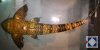
Click for full imageParaloricaria commersonoides
Dorsal view
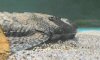
Click for full imageParaloricaria commersonoides
Head view
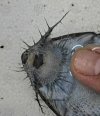
Click for full imageParaloricaria commersonoides
Mouth view


SIf you would like to contribute to the monthly factsheets with an article, information or photos, please e-mail me. You will of course be credited for your work.


Donate towards my web hosting bill!


If you would like to donate any denomination of monies to the site just click the above link button. All proceeds will go to running the site and hopefully to keep it going for a few years yet.

  • Facebook about us + contact us + citation + translate + site map + scotshop + glossary + etymology +
  • help YouTube

©2026 SCOTCAT.COM