SCOTCAT.COM
your internet guide to all things catfish
Pseudoqolus koko (Fisch-Muller & Covain, 2012) |
Image contributors to this species: |
Raphael Covain (2) Oliver Lucanus (1) |
ScotCat Sources: |
|

Other Sources: |
|


Relevant Information: |
Description: Dorsal spines (total): 2; Dorsal soft rays (total): 7; Anal spines: 1; Anal soft rays: 5. This species is distinguished by its large and almost spoon-shaped teeth characteristic of Panaqolus but bifid instead of most generally unicuspid in congeners, and characterised by its specific barcode sequence (JF747003). Sexual Differences: Males posses a broad head and odontodes on the posterior part of the body, behind the gill covers and on the pectoral spines. The latter two are a lot shorter in the females. Aquarium Care: Peaceful in the aquarium but not suitable for planted tanks as they are plant eaters. Diet: Wood eaters so would need this in an aquarium set-up. Feed also vegetable foods such as cucumber and courgette (zucchini) and sinking tablets. Etymology: Pseudoqolus is a portmanteau of the Greek word pseudes (false) and the genus name Panaqolus, indicating that although this genus may look superficially like Panaqolus, such an appearance is false.; koko: The name koko is a Wayana Amerindian name meaning night, in reference to the dark colouration of the species, and in allusion to the similarly coloured and named Panaqolus nocturnus. A noun in apposition. |
Common Name: |
Koko Pleco |
Synonyms: |
Panaqolus koko |
Family: |
Loricariidae |
Distribution: |
South America: Antecume Pata in upper Maroni River basin, French Guiana. |
Size: |
9.0cm (3½ins) |
Temp: |
25-29°c (77-85°f) |
p.H. |
|
6.0-7.0. |
IUCN Red List |
Pseudoqolus koko seems to have a restricted range of distribution, being only known from its original distribution from few localities in the upper Marouini /Maroni River basin, on the border of French Guiana and Suriname. The extent of occurrence (EOO) is estimated at 935 km2, and the area of occupancy (AOO) is estimated between 8-828 km2. However, it is expected that species also occurs in similar habitats along other portions of its distribution. Further survey work is needed to collect the species in more localities in order to better understand its real range. Not much is known about the population, how possible impacts can affect the species, and whether there are additional subpopulations in the tributaries. Hence, due to the lack of distribution data available and the unknown threats to Pseudoqolus koko, it is listed as Data Deficient (IUCN 2022). |
Reference: |
|
Calegari, B.B.
2022. Pseudoqolus koko. The IUCN Red List
of Threatened Species 2022. |

Family: Loricariidae Back to Ident-A-Cat Click on Thumbnails |
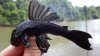 Pseudoqolus
koko Pseudoqolus
koko |
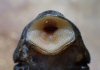 Pseudoqolus
koko Pseudoqolus
kokoView of dental detail |
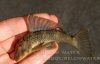 Pseudoqolus
koko Pseudoqolus
koko |
If you would like to contribute to the monthly factsheets with an article, information or photos, please e-mail me. You will of course be credited for your work.

If you would like to donate any denomination of monies to the site just click the above link button. All proceeds will go to running the site and hopefully to keep it going for a few years yet.

