SCOTCAT.COM
your internet guide to all things catfish
Rhadinoloricaria andaki Provenzano-Rizzi, F., Chaves-Moreno, L.C., Ordoñez, B.M. & Ortega-Lara, A., 2024 |
Image contributors to this species: |
Daniel Konn-Vetterlein (3) |
ScotCat Sources: |
|

Other Sources: |
|


Relevant Information: |
Abstract: During 2009, photos of three specimens in poor conditions from the Caquetá River system in Colombia generated suspicions about the existence of a new species of Rhadinoloricaria. In 2022, additional specimens were obtained from the same aquatic system allowing confirm the new species presence. The new species has a projected, spatula-shaped snout, and a pattern of buccal ornamentation similar to that observed in R. macromystax (Günther 1869) and R. stewarti Provenzano & Barriga 2020. The new species is distinguished from similar Rhadinoloricaria by the pattern of plates covering the abdomen and some morphometric proportions. When comparative analyses were performed among these three species, paratype lot of R. stewarti MEPN-I 14710 with three specimens was found to be identical to the new species herein described; therefore this paratype is re-identified. The presence of the new species of Rhadinoloricaria in Colombia expands the northern limit of its geographical distribution (Provenzano et al 2024). Habitat: Occurs in the main river and major tributaries, always over sandy beaches. Reproduction: These taxa are abdomino-lip brooders. Eggs are laid in a single layered mass, and are attached to the surface of the lower lip and abdomen of the male. Aquarium Care: Likes to bury itself in a deep sandy bottom substrate with only the eyes being visible so you would need to provide this for aquarium maintenance. A good water current and partial water changes are needed to keep this species/genera in good condition. As this genera is smaller than the other larger lip brooders of the Pseudohemiodon genus, Rhadinoloricaria would be a better bet for aquarium husbandry. Diet: Feed with tablet foods, frozen mosquito larvae, daphnia etc. Remarks: Can still be found on some online sources as the predescribed Rhadinoloricaria sp. "Caqueta". |
Common Name: |
Dragon Loricarid, Rhadinoloricaria sp. "Caqueta" |
Synonyms: |
None |
Family: |
Loricariidae |
Distribution: |
Colombia: Rio Caqueta. |
Size: |
15.0cm. (6ins) T.L. |
Temp: |
22-30°c (71-87°f.) |
p.H. |
|
6.0-7.0. |
Reference: |
Covain, R., S. Fisch-Muller,
C. Oliveira, J. H. A. Mol, J. I. Montoya-Burgos and
S. Dray 2015 (29 Oct.) Molecular phylogeny
of the highly diversified catfish subfamily Loricariinae
(Siluriformes, Loricariidae) reveals incongruences
with morphological classification. Molecular Phylogenetics
and Evolution v. 94 (Pt. B): 492-517 [1-26]. |

Family: Loricariidae Back to Ident-A-Cat Click on Thumbnails |
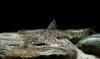 Rhadinoloricaria
andaki Rhadinoloricaria
andaki |
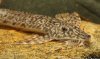 Rhadinoloricaria
andaki Rhadinoloricaria
andakiHead view |
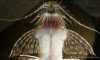 Rhadinoloricaria
andaki Rhadinoloricaria
andakiMouth view |
If you would like to contribute to the monthly
factsheets with an article, information or photos, please e-mail
me. You will of course be credited for your work.

If you would like to donate any denomination of monies to the site just click the above link button. All proceeds will go to running the site and hopefully to keep it going for a few years yet.

