SCOTCAT.COM
your internet guide to all things catfish
Rhinotocinclus eppleyi (Schaefer & Provenzano, 1993) |
Image contributors to this species: |
Daniel Konn-Vetterlein (2) Ivan Mikolji (1) Nathan Lujan (1) |
ScotCat Sources: |
|

Other Sources: |
|
|


Relevant Information: |
A new genus has been erected, Rhinotocinclus, (2022) with the type species of Parotocinclus longirostris Garavello, 1988. Description: Rhinotocinclus eppleyi is distinguished from R. acuen, R. bockmanni, R. chromodontus, R. dani, R. dinizae, R. hera, R. jumaorum, R. pentakelis, R. marginalis n. sp., and R. loxochelis n. sp. by possessing an adipose fin (vs. adipose fin absent), and by having a Y-shaped light mark from the snout tip to each nostril (vs. light mark V-shaped or present as two separate lines from snout tip diverging to each nostril). It is distinguished from R. collinsae, R. halbolthi, and R. hardmanni by lacking accessory teeth on both premaxilla and dentary (vs. accessory teeth present ); the odontodes on the ventral surface of first pelvic-fin ray bent and pointing mesially (vs. odontodes aligned with main ray axis ); a triangular dark spot on the anterior portion of the dorsal-fin membrane (vs. dorsal-fin spot absent); a Y-shaped light mark from snout tip to nostrils (vs. Y-shaped light mark absent); and a larger orbit, 26.7–31.4% snout length (vs. orbit 18.9–24.6% snout length). Rhinotocinclus eppleyi is distinguished from R. britskii and R. kwarup, by having the snout more acutely pointed (vs. snout more broadly rounded ); dark bars on body wider and closer together (vs. dark bars on body narrower and more widely spaced ); and 3–4 plates between the posterior border of the rostral plate and the nostril (vs. one plate). Rhinotocinclus eppleyi is distinguished from R. polyochrus, R. variola, R. yaka, R. discolor n. sp., R. isabelae n. sp., and R. pilosus n. sp. by having 4–5 irregular series of middle abdominal plates (vs. 0–2, rarely 3 irregular series); and five dark bars on body; vs. four dark bars with bars 1+2 or 2+3 fused). It is distinguished from R. longirostris by having fewer premaxillary (22–30, mode 26) and dentary (21–27, mode 25) teeth (Tabs. 1–2, vs. more numerous premaxillary, 28–36, mode 30 and dentary, 27–31, mode 30 teeth). Aquarium Care: I would suggest a minimum size of 24” x 15” X 12” for a small shoal of these catfish, with plenty of hiding places amongst bogwood and plants. I would suggest good quality aquarium sand such as BD Aquarium Sand, or very smooth rounded gravel as the preferred substrate when keeping these catfish. The aquarium should provide some shelter in the form of rocks or bogwood along with the inclusion of some taller aquatic plants such as Vallis. As with all other species of fish, water quality and general husbandry is very important, and I would recommend that a minimum of 25% water is changed on a weekly basis. Diet: Readily accepts a mixed and varied diet which includes lettuce, cucumber, courgette (zucchini), tablet foods, flake foods, granular foods, frozen bloodworm, to name but a few. Try also to provide rocks covered with algae or other methods like this for this species as they will feed on this, and also the very small microscopic animals that are found amongst the algae. Etymology: Rhinotocinclus masc., from the Greek ????s (Rhinos), beak, snout and Otocinclus, a genus of Hypoptopomatinae, in allusion to the conspicuous and elegant snout of most of its species. Remarks: Most online searches at the moment (2022) will still give you the old genus name of Parotocinclus. |
Common Name: |
None |
Synonyms: |
Parotocinclus eppleyi |
Family: |
Loricariidae |
Distribution: |
South America: Upper and middle portions of the Rio Orinoco, Venezuela. Type locality: Caño Curicurito, ca. 1 km above its mouth into the Río Autana, Amazonas, Venezuela, 4º47'N, 67º25'W. |
Size: |
3.0cm. (1¼ins) |
Temp: |
26-29°c (79-85°f.) |
p.H. |
|
6.5-7.5. |
Reference: |
Ferraris, C.J. Jr.,
2007. Checklist of catfishes, recent and fossil (Osteichthyes:
Siluriformes), and catalogue of siluriform primary
types. Zootaxa 1418:1-628. |

Family: Loricariidae Back to Ident-A-Cat Click on Thumbnails |
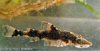 Rhinotocinclus
eppleyi Rhinotocinclus
eppleyi |
 Rhinotocinclus
eppleyi Rhinotocinclus
eppleyi |
 Rhinotocinclus
eppleyi Rhinotocinclus
eppleyi |
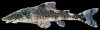 Rhinotocinclus
eppleyi Rhinotocinclus
eppleyiCaño Parhueña, Puerto Ayacucho, upstream of Route 12 bridge, ca. 35 km NE of Puerto Ayacucho, Amazonas, Venezuela |
If you would like to contribute to the monthly factsheets with an article, information or photos, please e-mail me. You will of course be credited for your work.

If you would like to donate any denomination of monies to the site just click the above link button. All proceeds will go to running the site and hopefully to keep it going for a few years yet.

