SCOTCAT.COM
your internet guide to all things catfish
Rineloricaria sanga Ghazzi, 2008 |
Image contributors to this species: |
ScotCat Sources: |
|
|

Other Sources: |
|


Relevant Information: |
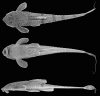
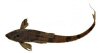
Description: Dorsal soft rays (total): 8; Anal soft rays: 6. Body flattened, strongly depressed in caudal peduncle, tapering posteriorly from the pectoral fins. Slightly convex dorsal profile of tip of snout to insertion of the dorsal fin, declining slightly to become straight at the end of the caudal peduncle. Previous profile of head triangular in dorsal view. Conspicuous odontodes on the head and pre-dorsal region, arranged in rows on the pterótico compound; developed on the sides of the head of sexually mature males. The tip of the snout with small naked area oval not reaching the more pore infraorbital sensory channel in front of bottom margin of the muzzle. Crest originated at the tip of the snout, forked interorbital region. Couple of divergent crests the parieto-and supraoccipital pre-dorsal conspicuous; Crest conspicuous in the three plates situated laterally of each side of pre-dorsal plates. The upper rim of the orbit protruding, extending earlier; slot pósorbital with about half of the eye or little larger; orbit 1.1 times in the interorbital distance. Eye rounded to oval, partially covered by a rainbow small diverticulum. Reproduction: The Rineloricaria species are usually cave spawners, where the female will place their eggs after the male has cleaned inside. The male will then guard and fan the eggs until hatching. The eggs will hatch in 4-5 days whereas the male can now be removed. More breeding information can be found here in the articles breeding section. Aquarium Care: As with all Rineloricaria provide long leaved plants or bamboo stalks for them to hang on to. Diet: Omnivore. Vegetable food such as cucumber and other various foods such as tablet, flake and frozen. Etymology: The specific name sanga, noun in apposition, originated from the Castilian word "digging", was given in reference to the location of collection of new species. Sanga is a term used commonly in Rio Grande do Sul and Santa Catarina for stream or small stream. Remarks: More information in the referenced paper (Ghazzi, 2008). |
Common Name: |
None |
Synonyms: |
None |
Family: |
Loricariidae |
Distribution: |
South America: Known only from the vicinity of Iraí in Rio Uruguay basin, Brazil. |
Size: |
10.0cm. (4ins) |
Temp: |
20-24°c (67-75°f) |
p.H. |
|
6.0-7.0. |
Reference: |
Froese, R. and D. Pauly.
Editors. 2011. FishBase. World Wide Web electronic
publication. www.fishbase.org, version. |

Family: Loricariidae Back to Ident-A-Cat Click on Thumbnails |
 Rineloricaria
sanga Rineloricaria
sangaDorsal, ventral & lateral view |
 Rineloricaria
sanga Rineloricaria
sangaDorsal view |
If you would like to contribute to the monthly factsheets with an article, information or photos, please e-mail me. You will of course be credited for your work.

If you would like to donate any denomination of monies to the site just click the above link button. All proceeds will go to running the site and hopefully to keep it going for a few years yet.

