SCOTCAT.COM
your internet guide to all things catfish
Rineloricaria steindachneri (Regan, 1904) |
Image contributors to this species: |
ScotCat Sources: |
|
|

Other Sources: |
|


Relevant Information: |
Abstract: During the Pleistocene, repeated fluctuations in sea level changed the coastal landscape of southeastern Brazil. When sea levels fell, large areas of the continental shelf became exposed. Neighbouring rivers could merge or develop connections, allowing freshwater fish populations to spread between drainage systems. When sea levels rose again, these connections disappeared, isolating populations in separate river basins. Researchers investigated whether these historical changes contributed to the evolution and geographical distribution of whiptail catfish populations previously identified as Rineloricaria steindachneri. The study combined mitochondrial DNA markers (COI and CytB), a nuclear DNA marker (RAG1), and detailed morphological measurements (Mejia & Buckup 2026). Our analysis revealed clear genetic and morphological distinction between the two Rineloricaria morphotypes: R. steindachneri and the newly described R. capixaba. These results confirming our earlier delimitation of the former species (Mejia, Buckup, 2024), which restricted R. steindachneri to the lower Paraíba do Sul basin, while the geographic distribution of R. capixaba is assigned to the coastal Itabapoana, Itapemirim, Iconha, and Benevente river basins of southern Espírito Santo. Mitochondrial COI data demonstrate strong differentiation (Fst = 0.861; Nm = 0.08) and an average K2P divergence of ~2.0%, supporting their recognition as distinct evolutionary lineages and matching the 2–3% threshold commonly used to delimit freshwater fish species (Ward et al., 2009; Pereira et al., 2013; Ribolli et al., 2017). Reproduction: The Rineloricaria species are usually cave spawners, where the female will place their eggs after the male has cleaned inside. The male will then guard and fan the eggs until hatching. The eggs will hatch in 4-5 days whereas the male can now be removed. More breeding information can be found here in the articles breeding section. Lays up to 200 green eggs. The male may be nervous if disturbed but rearing the fry separately poses no problems. Aquarium Care: As with all Rineloricaria provide long leaved plants or bamboo stalks for them to hang on to. Also include rocks and bogwood into the aquarium with a sand substrate. Provide some pvc piping for breeding purposes. A good community tank fish if kept with non aggressive species. Diet: Omnivore. Vegetable food such as cucumber and other various foods such as tablet, flake and frozen. Etymology: The specific name steindachneri: Honours the Austrian ichthyologist Franz Steindachner (1834-1919), who was the first to report this fish, albeit under the name R. lima. |
Common Name: |
None |
Synonyms: |
Loricaria steindachneri |
Family: |
Loricariidae |
Distribution: |
South America: Lower Paraíba do Sul River basin, Minas Gerais and Rio de Janeiro states (southeastern Brazil). Type locality: Eastern Brazil, from the Rio Preto to the Rio Parahyba. |
Size: |
19.0cm. (7½ins) TL. |
Temp: |
22-25°c (71-77°f) |
p.H. |
|
6.0-7.0. |
IUCN Red List |
Rineloricaria steindachneri is an endemic species of the Paraíba do Sul River basin, widely distributed and naturally uncommon. The high degree of degradation of the basin imposes diffuse threats on the species, which cannot yet be quantified, but must be monitored. As current knowledge of these threats does not indicate a risk of extinction, Rineloricaria steindachneri has been listed in the Least Concern (LC) category (IUCN 2022). |
Reference: |
Ferraris, C.J. Jr.,
2003. Loricariidae - Loricariinae (Armored catfishes).
p. 330-350. In R.E. Reis, S.O. Kullander and C.J.
Ferraris, Jr. (eds.) Checklist of the Freshwater Fishes
of South and Central America. Porto Alegre EDIPUCRS,
Brasil. |

Family: Loricariidae Back to Ident-A-Cat Click on Thumbnails |
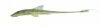 Rineloricaria
steindachneri |
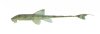 Rineloricaria
steindachneri |
If you would like to contribute to the monthly factsheets with an article, information or photos, please e-mail me. You will of course be credited for your work.

If you would like to donate any denomination of monies to the site just click the above link button. All proceeds will go to running the site and hopefully to keep it going for a few years yet.

